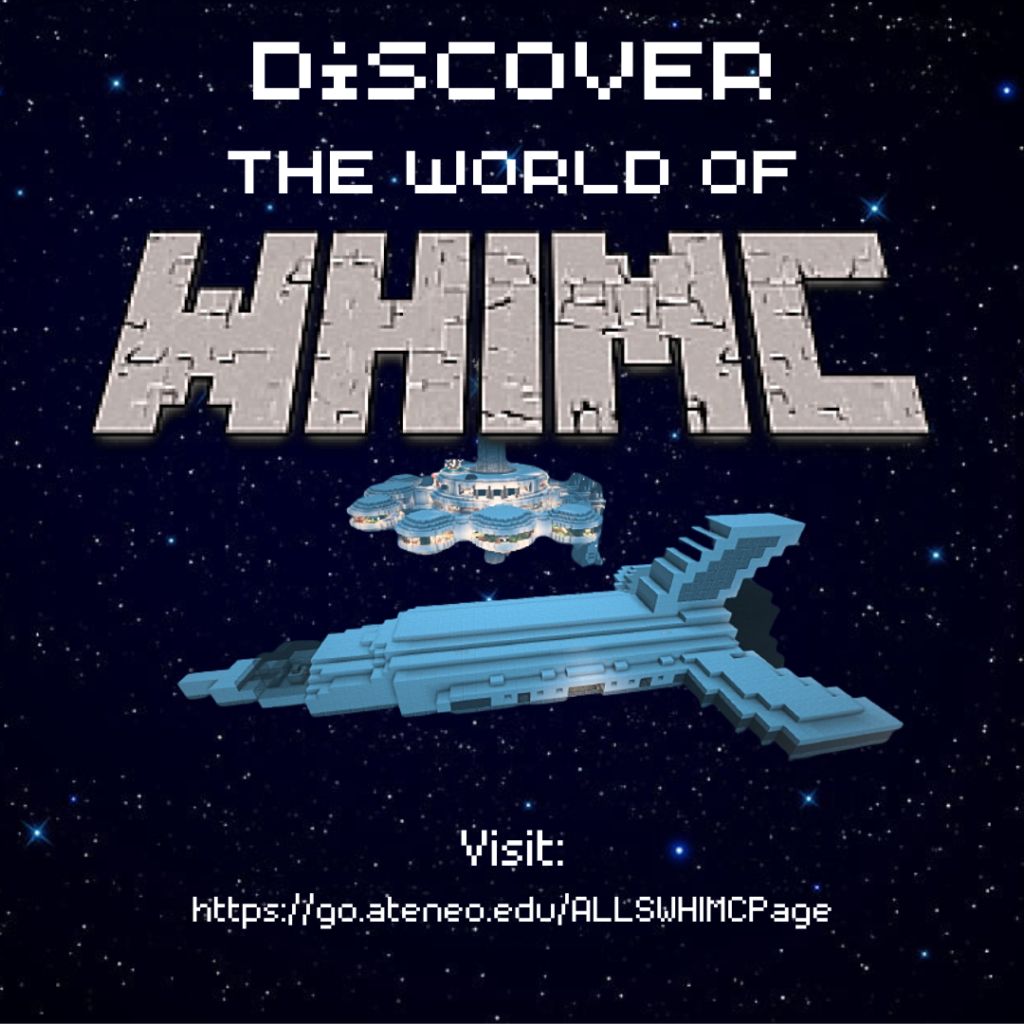
ALLS reintroduces What-If Hypothetical Implementations in Minecraft (WHIMC) to the public with the continuation of the project, Nurturing Interest in STEM Among Filipino Learners Using Minecraft. This project aims to deploy WHIMC to other schools, specifically public schools to determine the impacts of using WHIMC and Minecraft in cultivating the interests of students in Science, Technology, Engineering, and Mathematics.
QUEZON CITY, PHILIPPINES – The Ateneo Laboratory for the Learning Sciences (ALLS) has conducted a series of teacher trainings for basic education teachers that focused on module development using the What-If Hypothetical Implementations in Minecraft (WHIMC) worlds. The goals were to introduce Minecraft and WHIMC to the teachers, and develop their skills on module or lesson plan development using WHIMC in their classes.
Through its project Nurturing Interest in STEM among Filipino Learners using Minecraft funded by DOST-PCIEERD, ALLS was able to conduct four (4) teacher training sessions in total – two online and two on-site trainings.
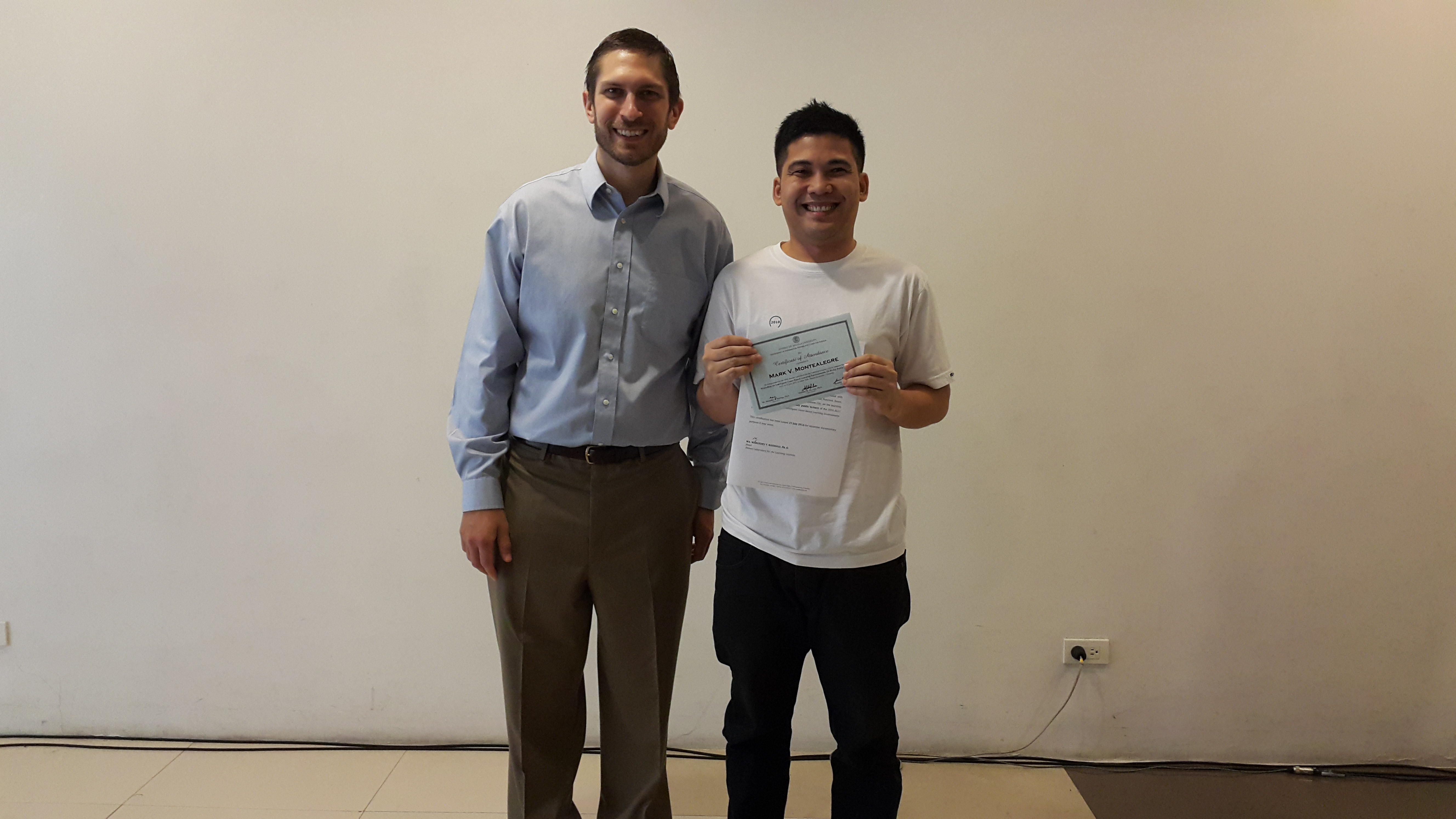
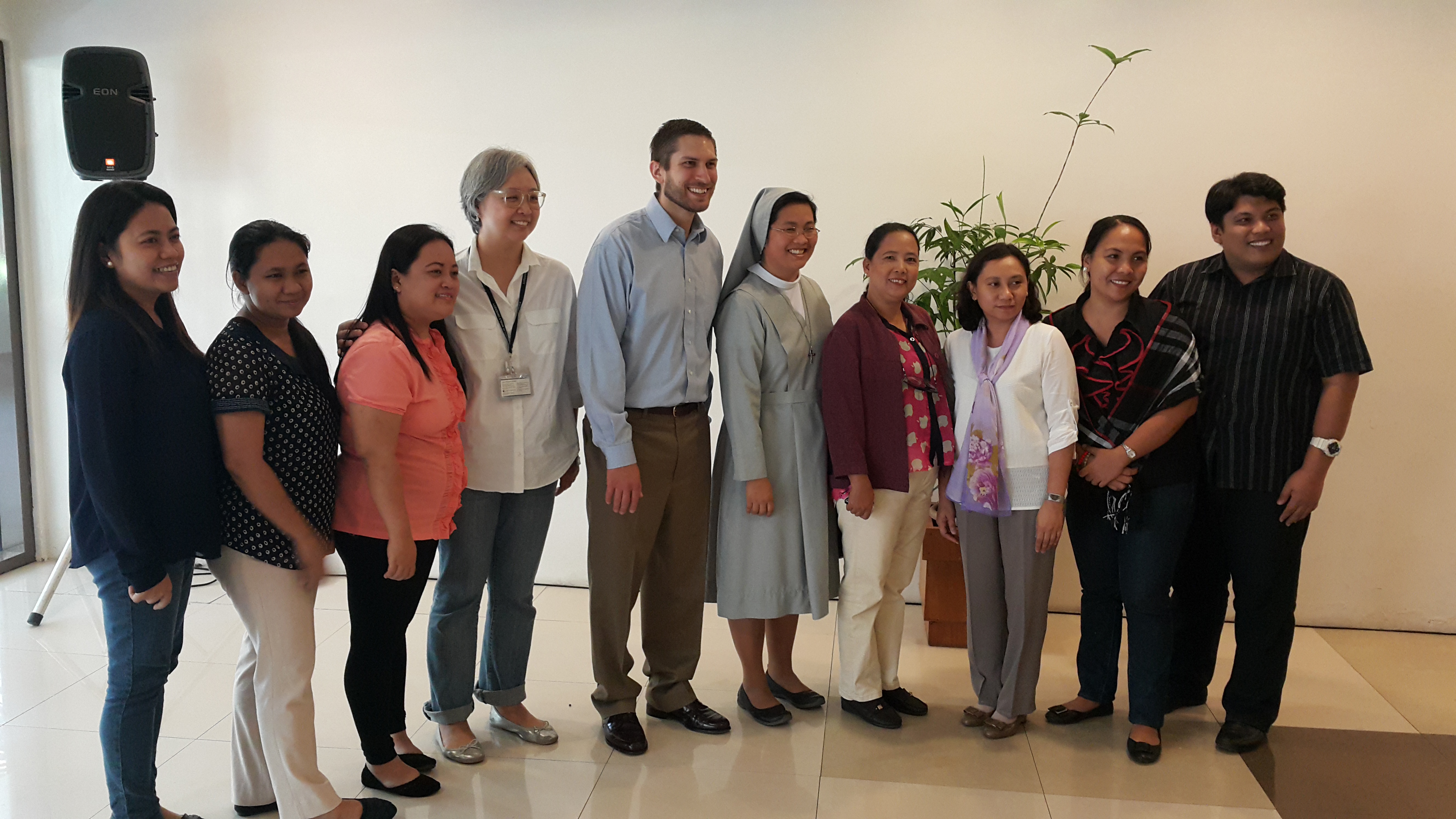
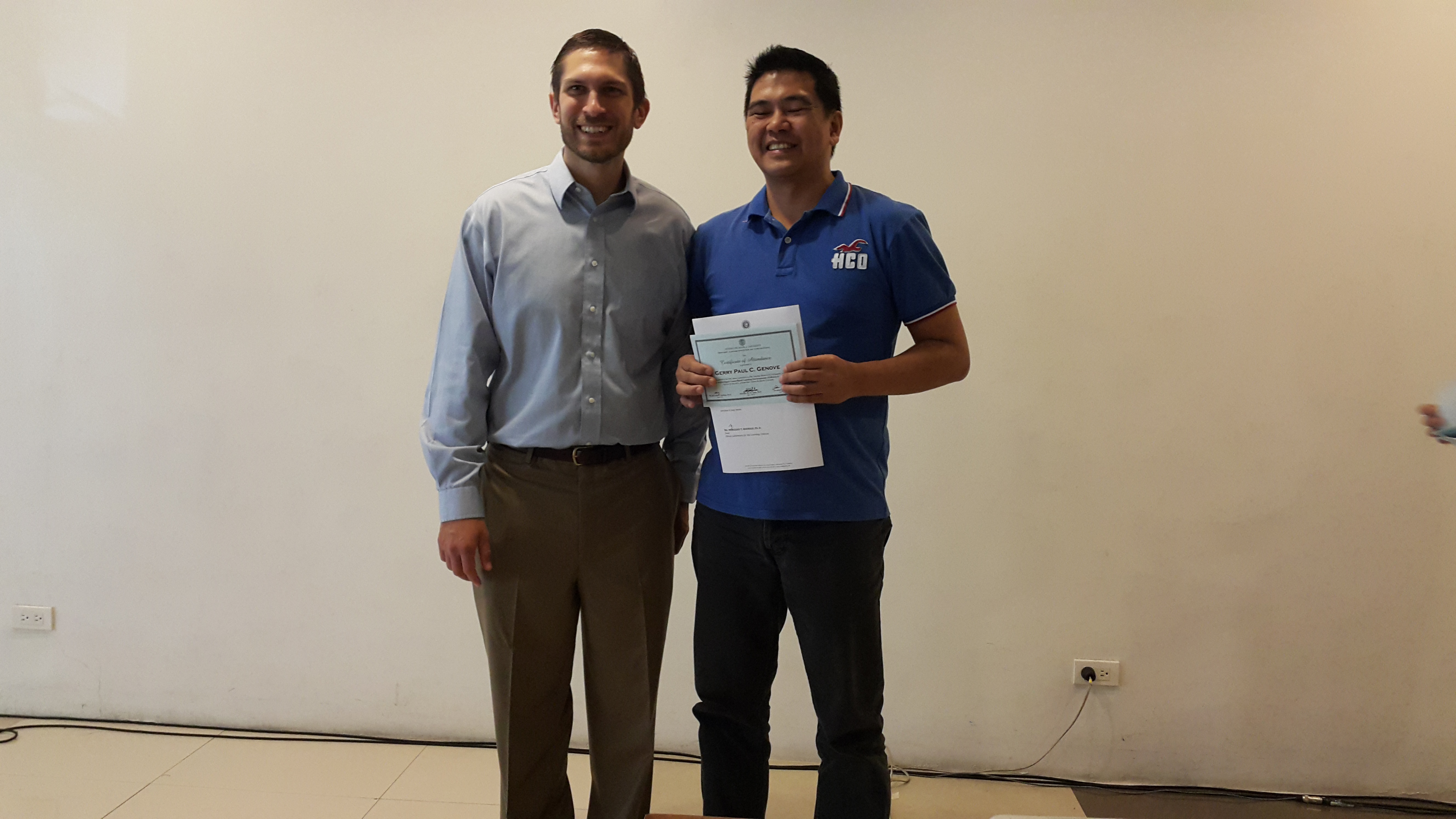
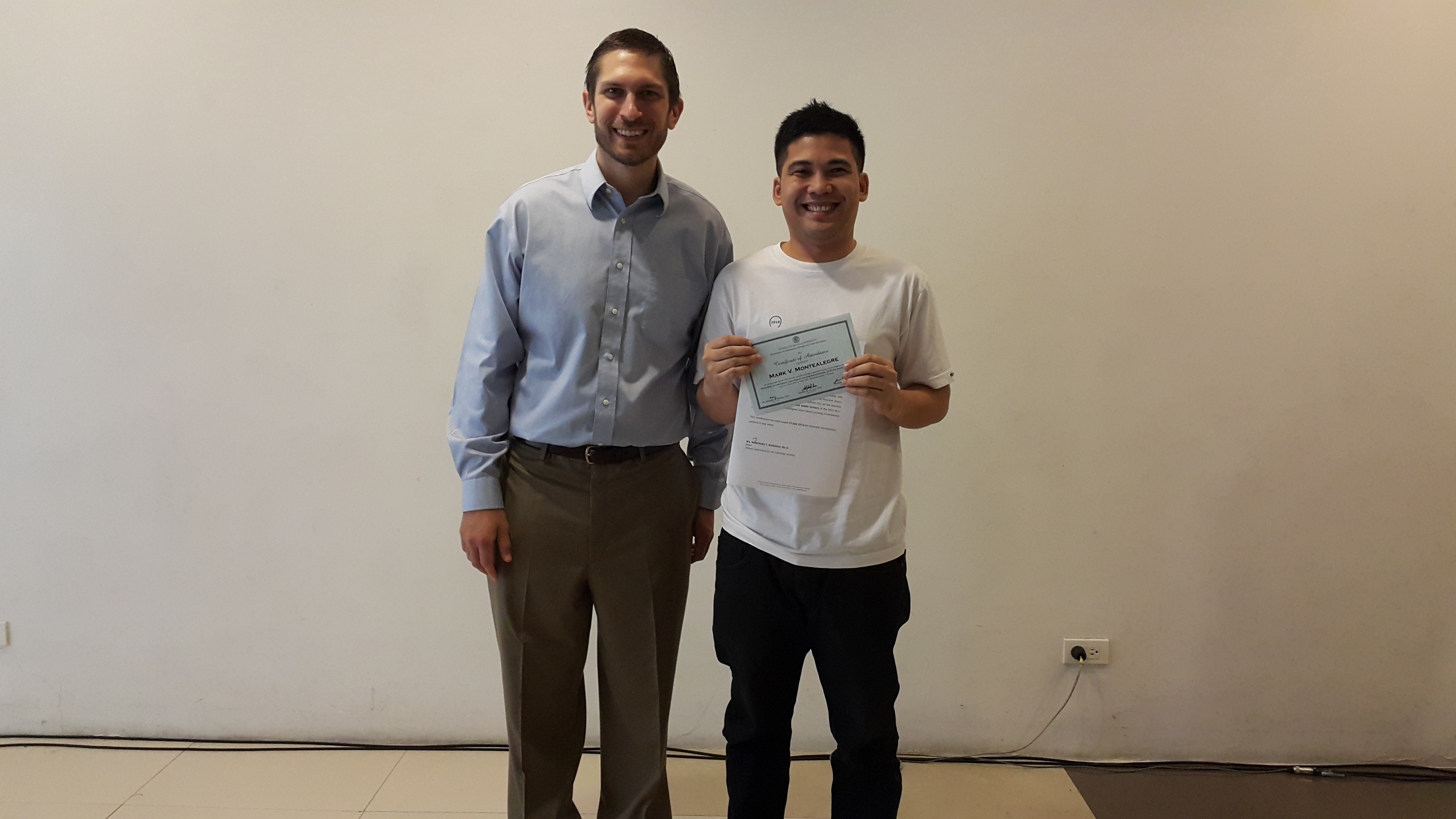
In March 2021, ALLS conducted one (1) online teacher training on the purpose and use of WHIMC in partnership with Dr. Jeff Ginger of the University of Illinois Urbana-Champaign (UIUC), a postdoctoral associate of the WHIMC project of UIUC. A total of six (6) teacher participants attended the training. ALLS then conducted another online teacher training on developing learning modules using WHIMC last May 2022, which was in partnership with the Ateneo Teacher Center. A total of sixteen (16) teachers have successfully completed the training requirements and received Continuing Professional Development (CPD) units.
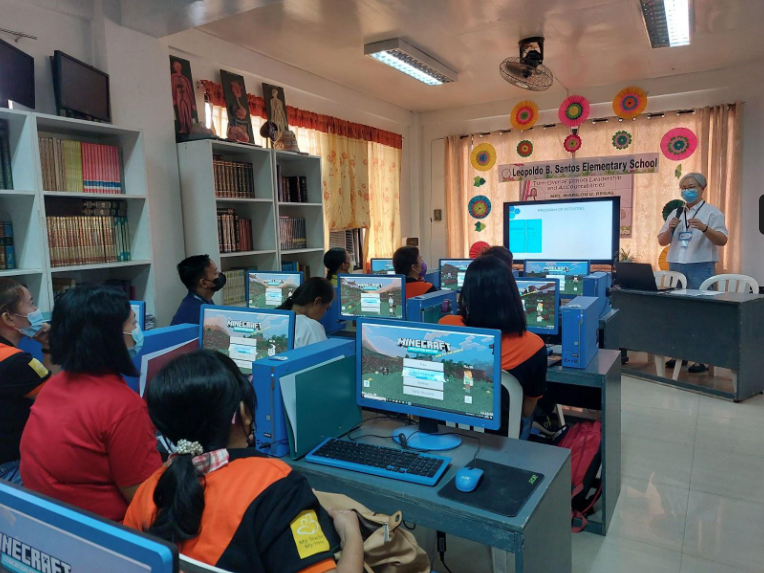
Then, in October 2022, ALLS started to conduct on-site trainings for for Ramon Magsayasay Elementary School (RMES) and Leopoldo B. Santos Elementary School (LBSES) intermediate level teachers.
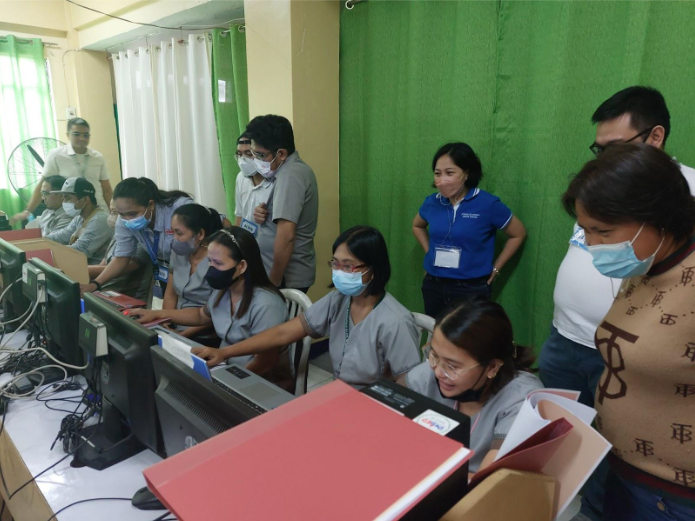
Workshop on the use of WHIMC EE at RMES. The training facilitators and the school principal intently observe the teachers trying the game.
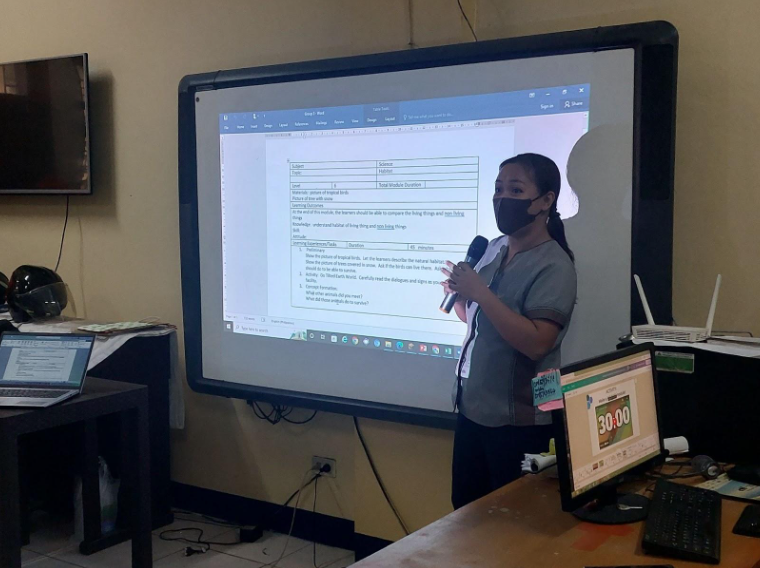
Dr. Rodrigo discussed the training program during the training with RMES teachers.
A teacher from LBSES presenting the sample module their group drafted as an exercise.
After the training, each school endorsed teachers from Grade levels 4, 5 and 6. The teachers drafted lesson plans integration WHIMC in a topic from the school curriculum, and implemented it to a pilot class from said levels.
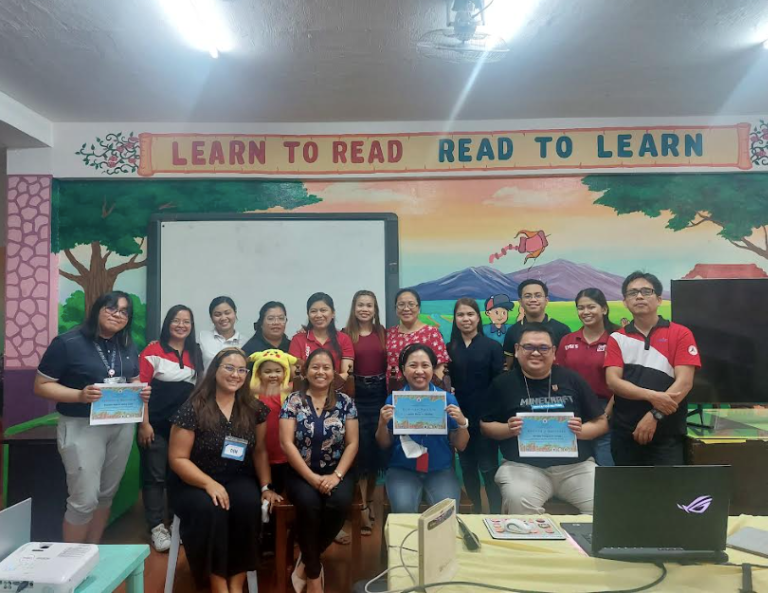
ALLS team and the teachers of ERSES
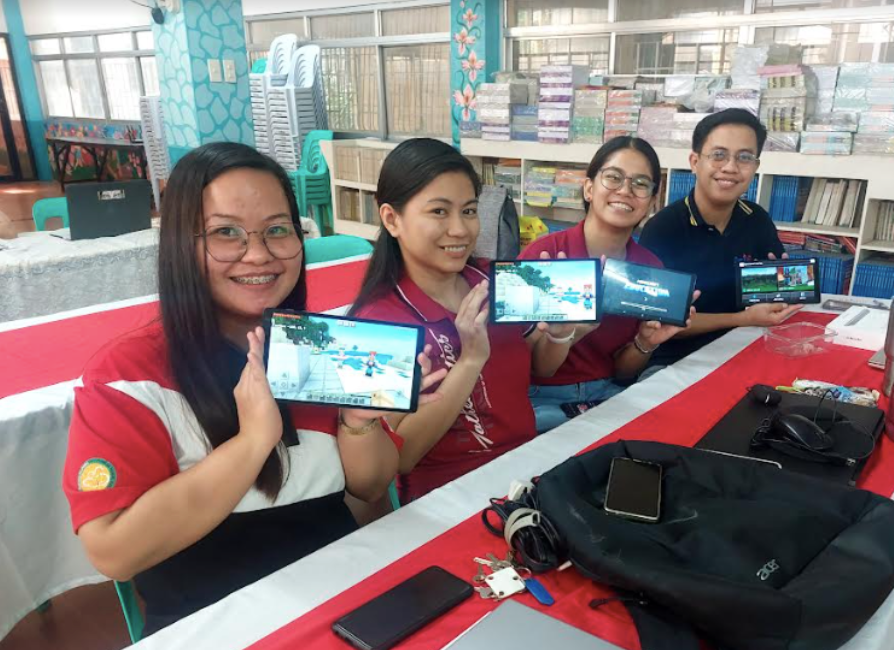
ERSES teachers showing their WHIMC Education Edition apps through the school’s tablets
With the new grant under the University Research Council (URC) of the Ateneo de Manila University, ALLS was able to conduct another on-site teacher training for Eulogio Rodriguez elementary school for their Grades 2 to 6 teachers. This is part of the laboratory’s effort to continue the school deployment of WHIMC in Education Edition
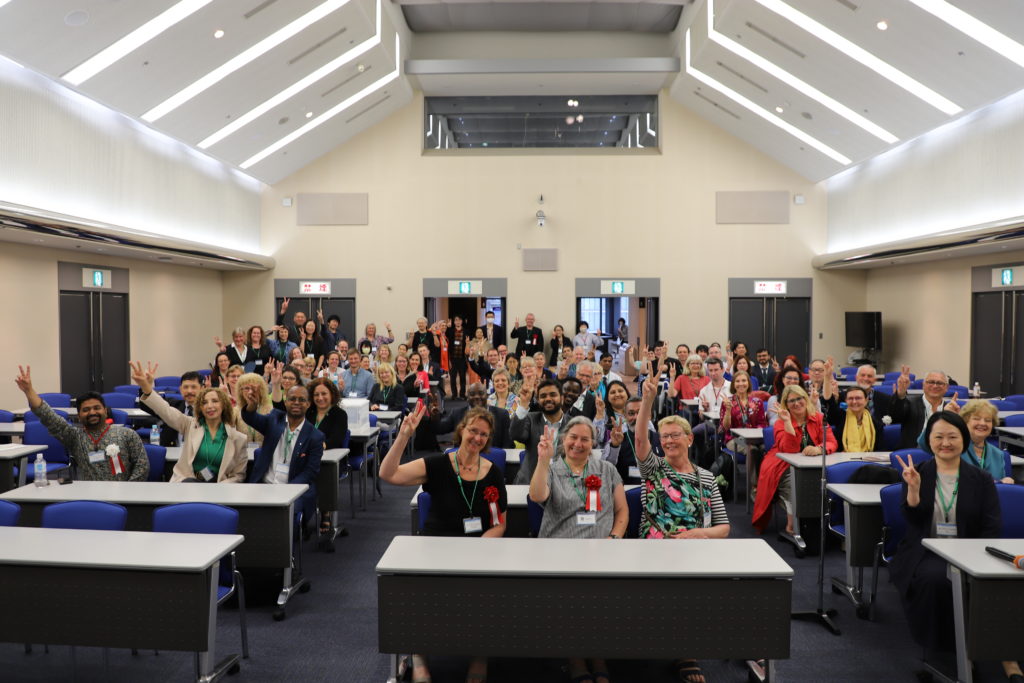
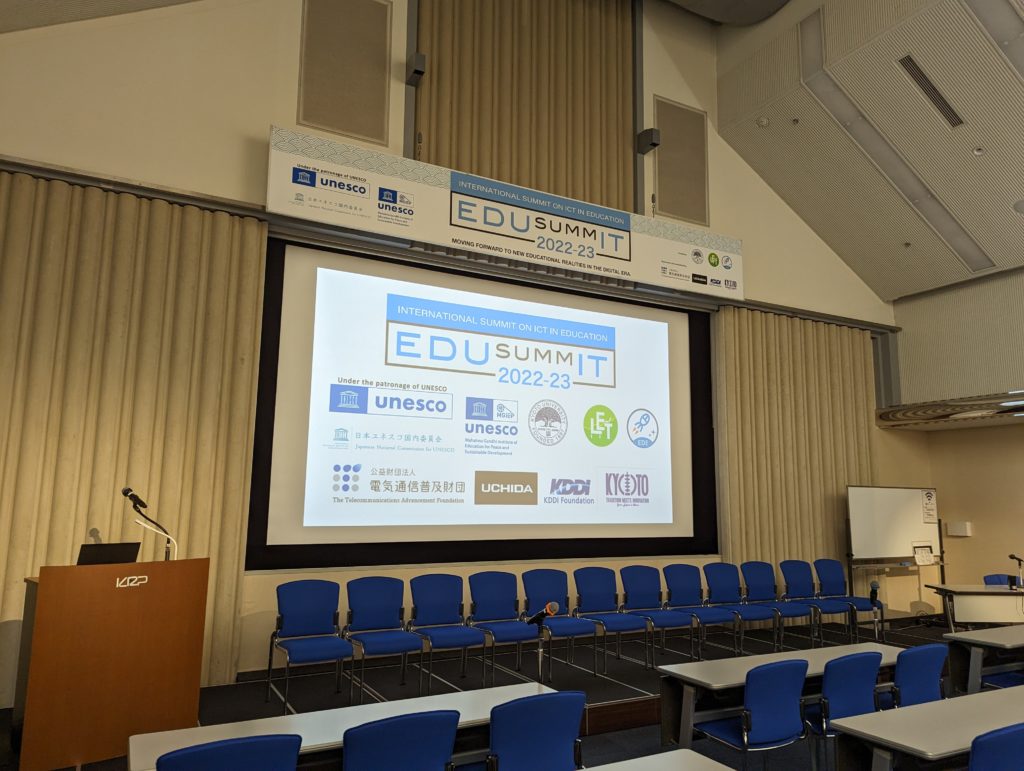
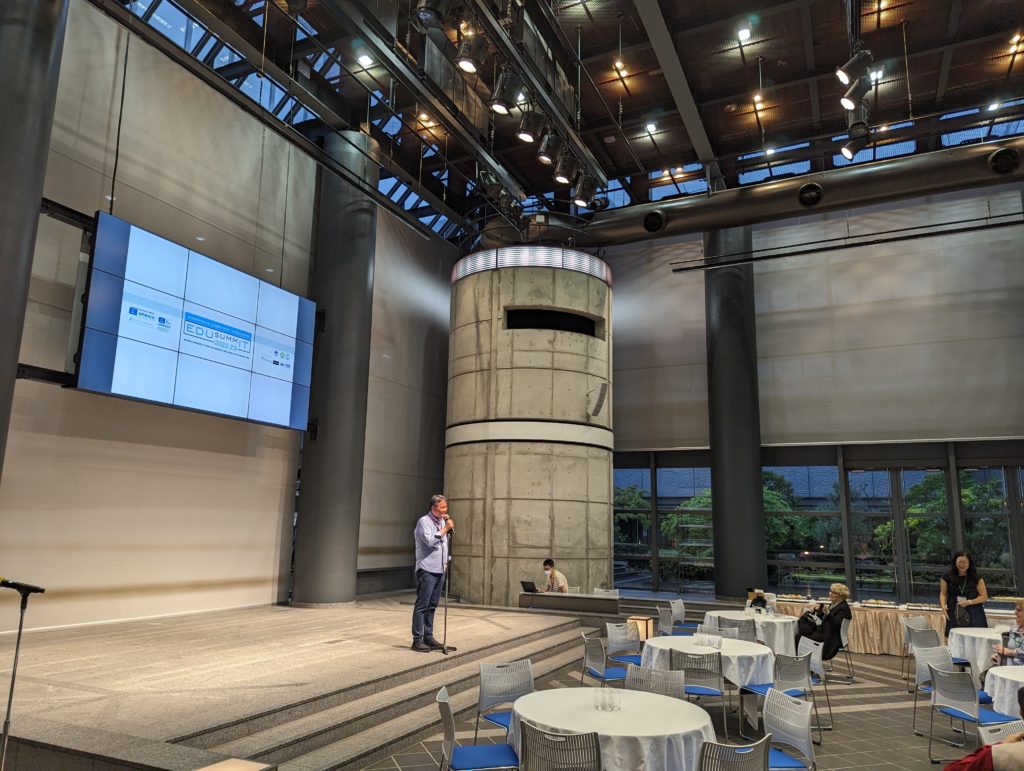
Dr. Maria Mercedes T. Rodrigo of ALLS attended EduSummIT 2023 from May 29 (Mon) – June 1 (Thu), 2023 in Kyoto, Japan. EduSummIT was a gathering of about 90 international researchers, educators, and practitioners interested in the use of effective and appropriate use of information technology in education. It was supported by UNESCO and hosted by the Ogata Laboratory at Kyoto University.
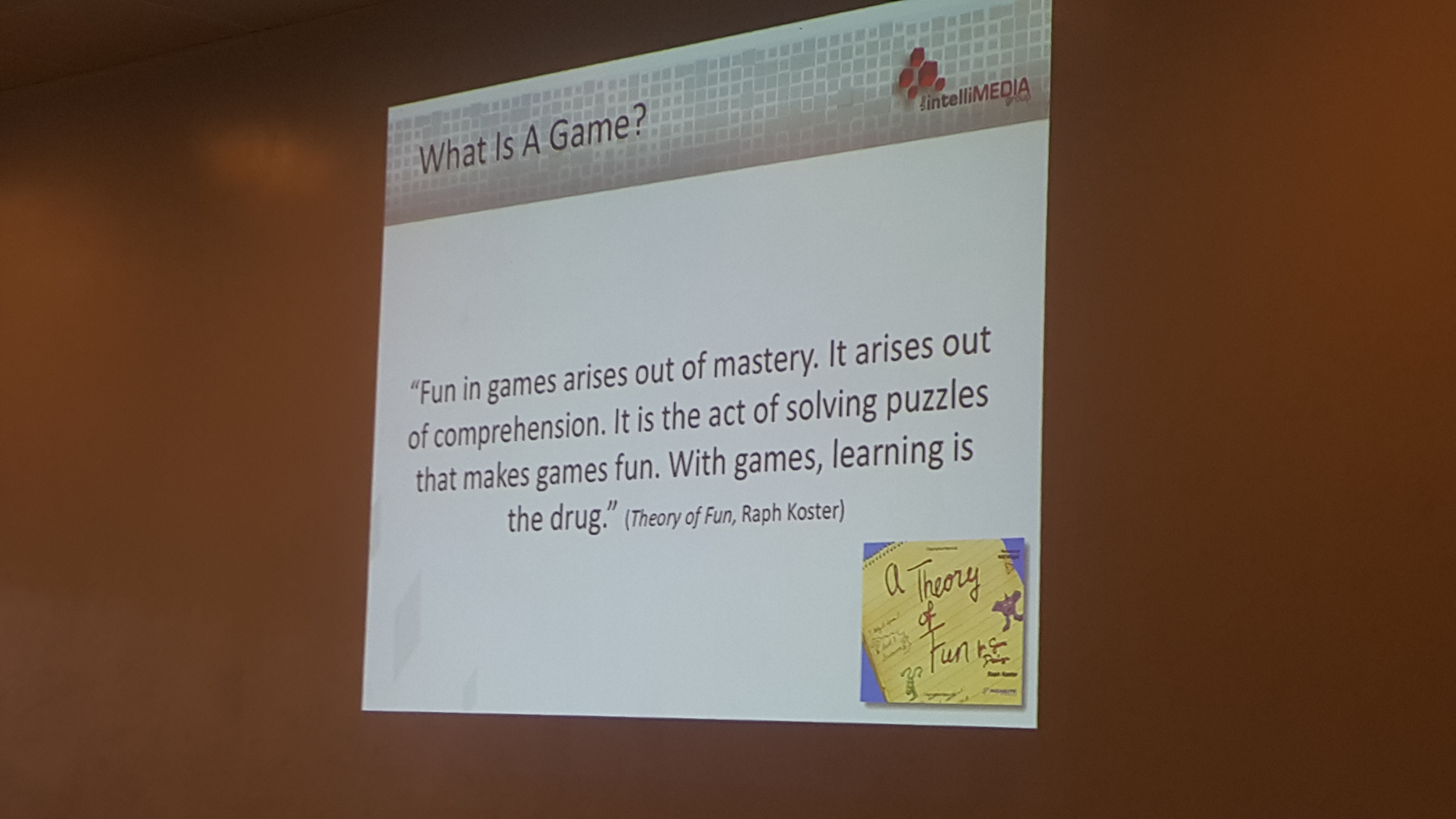
Games are used in classrooms in order to increase student motivation and engagement. But do they, really? This question is at the crux of research performed by the Ateneo Laboratory for the Learning Sciences (ALLS). Using the What-If Hypothetical Implementations Using Minecraft (WHIMC) developed at the University of Illinois Urbana Champaign (UIUC) as a platform, ALLS studies the effects of WHIMC on student interest in STEM, student affective states, and student in-game behaviors, among others.
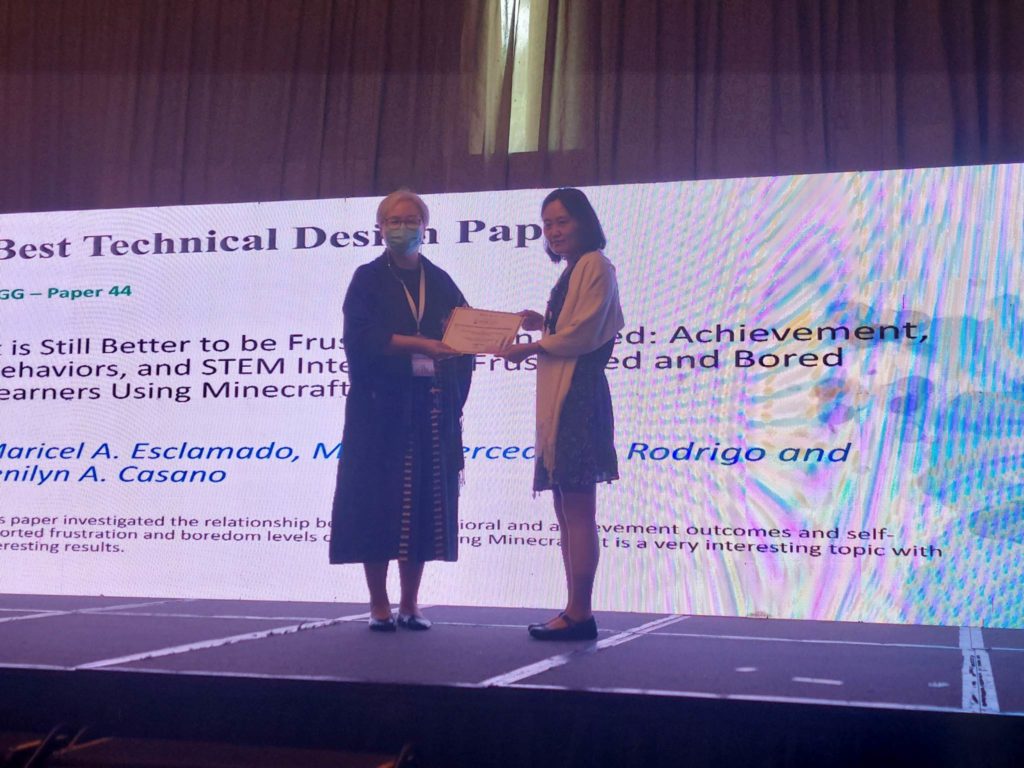
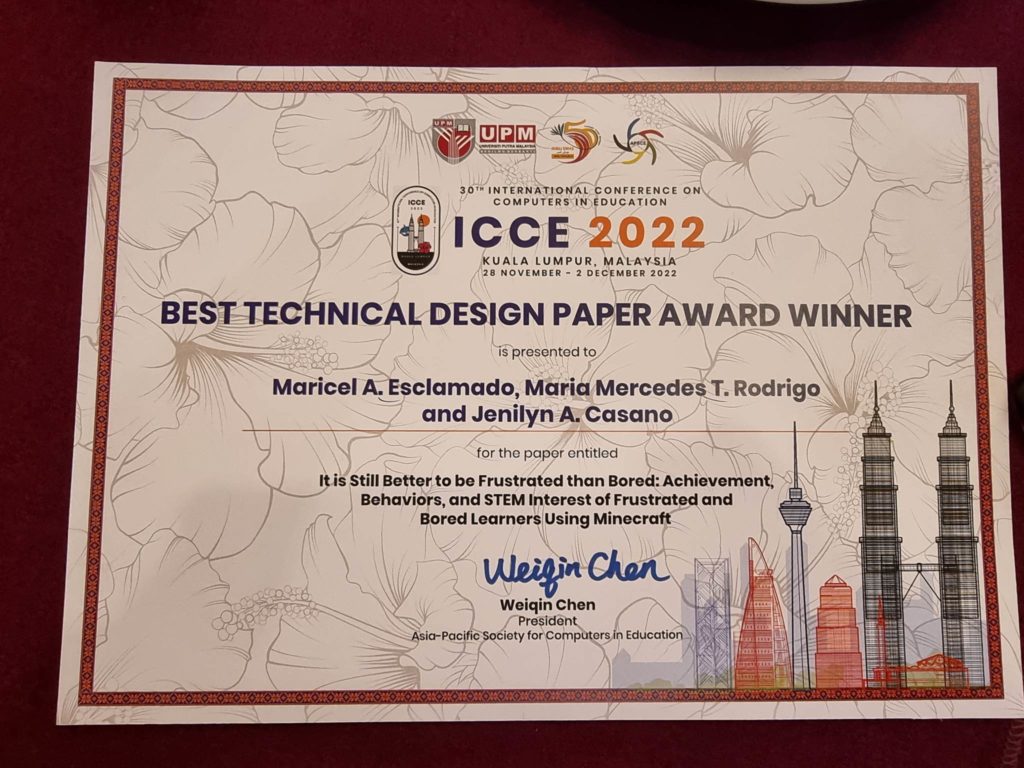
For this research, Ms. Maricel A. Esclamado, Dr. Maria Mercedes T. Rodrigo and Dr. Jenilyn A. Casano were awarded the Best Technical Design Paper Award for their paper entitled, “Achievement, Behaviors, and STEM Interest of Frustrated and Bored Learners using Minecraft” at the 30th International Conference on Computers in Education (ICCE 2022) held on Nov. 28 – Dec. 2, 2022 in Kuala Lumpur, Malaysia. ICCE is the flagship conference of the Asia Pacific Society for Computers in Education. The Best Technical Design Paper award is given to papers that discuss the application of existing technological tools to teaching, learning, and/or assessment in a highly innovative manner.
Analyzing student-game interaction logs and out-of-game assessments, the authors found that the game had no impact on the STEM interest of students who expressed boredom and frustration. Students who are frustrated tended to disengage from the game while students who are bored tend to do less well on post-game assessments.
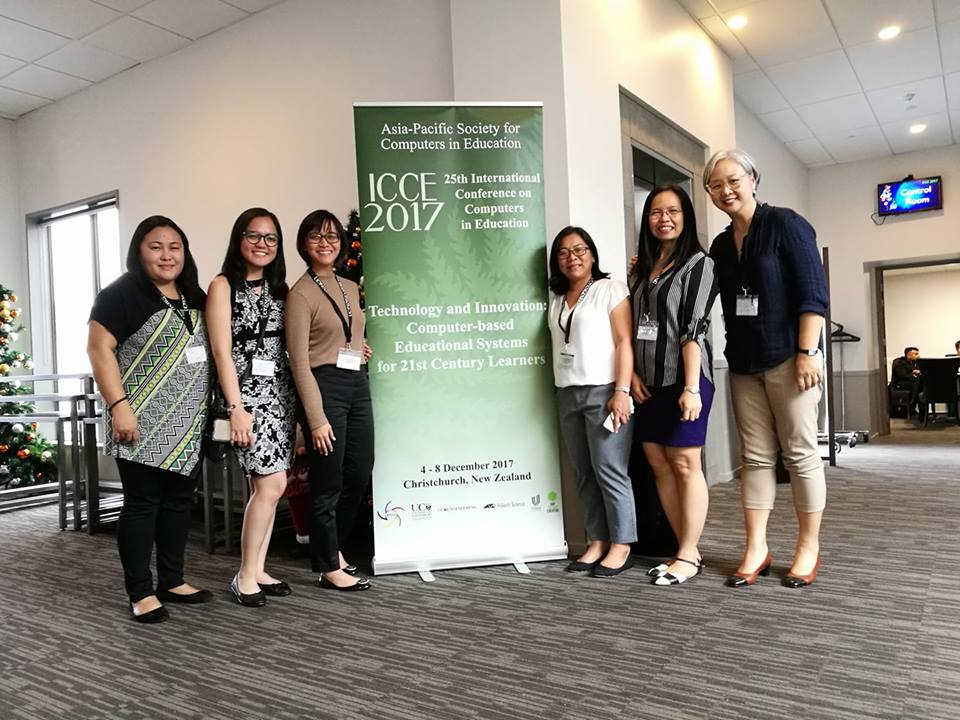
KUALA LUMPUR, MALAYSIA – Researchers from the Ateneo Laboratory for the Learning Sciences (ALLS) attended the 30th International Conference on Computers in Education (ICCE) 2022 last November 28 to December 2, 2022 in Kuala Lumpur, Malaysia. The ICCE 2022 is a flagship conference series of the Asia-Pacific Society for Computers in Education (APSCE), and the theme for this year was “optimising technology for sustainable quality education in the new norm.” ICCE 2022 was the first hybrid conference organized where there were participants who attended and presented virtually, while others like most of ALLS researchers attended in-person in Impiana KLCC hotel.
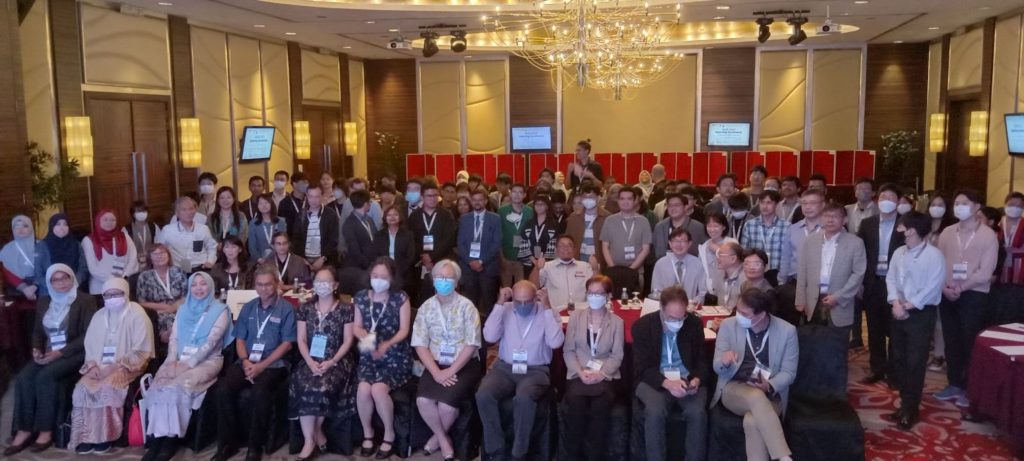
In photo: In-person ICCE 2022 attendees during the first conference day
The first two days of the conference were allotted to workshops and tutorials on various themes (i.e. ICT trends, educational games, metaverse, etc.) which the participants could choose from. One of the workshops, the 10th Workshop on Technology-Enhanced STEM Education, provided an opportunity for ALLS to present the paper entitled Support Structures for Teachers Preparing for Game-based Learning by Dominique Manahan and Maria Mercedes T. Rodrigo. The paper entitled Visualization of Student Procrastination Behavior in Discussion Forum Contributions by Ezekiel Adriel Lagmay and Maria Mercedes Rodrigo was presented during the 9th ICCE Workshop on Learning Analytics and Evidence-based Education, which took place during the workshop days.
The main conference started on the third day (November 30), where the conference participants online and in-person had the opportunity to listen to respected researchers discuss their works such as Dr. Ryan Baker from the University of Pennsylvania (U.S.A.), Su Luan Wong from UPM (Malaysia), Gwo-Dong Chen from the National Central University (Taiwan), and Rebecca Ferguson from the Institute of Educational Technology, The Open University (U.K.).
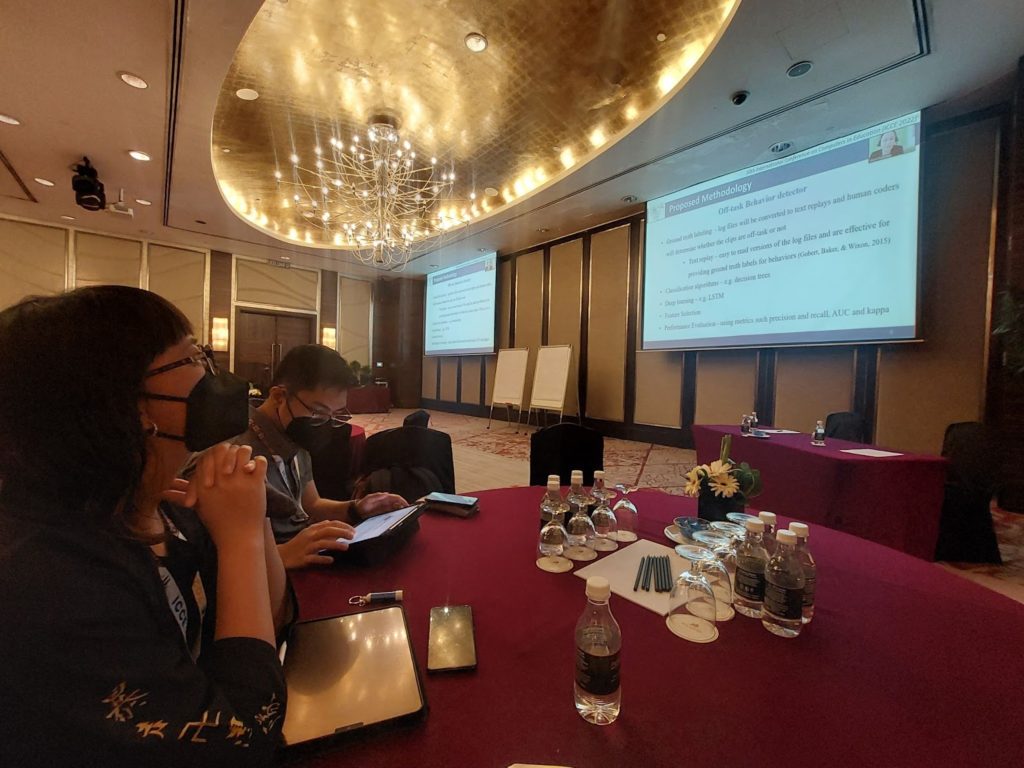
In photo: Dr. Jen Casano watching the virtual presentation of Ms. Maricel Esclamado
during the doctorate student consortium session at the ICCE 2022
During the main conference, ALLS’ research studies were given the opportunity to be presented to over 300 educators and researchers from 36 countries around the globe. The papers presented in the main conference were: An Analysis of Filipino Learners’ Game Rxperience and Science, Technology, Engineering and Mathematics (STEM) Interest within Minecraft by Jonathan Casano and Maria Mercedes T. Rodrigo;Achievement, Behaviors, and STEM Interest of Frustrated and Bored Learners Using Minecraft by Maricel A. Esclamado, Maria Mercedes T. Rodrigo and Jenilyn A. Casano; For People and Planet: A Pilot Study of an Educational Mobile Game on the Sustainable Development Goals by Maria Mercedes T. Rodrigo, Louise Marie C Tulayba, Marianne U. Lim, Marlon C Moralejo, Ananea Arcega, Maria Celeste A. Marasigan-Lascano and Allyah Elizabeth Orio; and a poster on Topic-Level Social Network Analysis (SNA) and Language and Discourse Metrics Correlation in Graded Course Discussion Forums by Ezekiel Adriel Lagmay and Maria Mercedes Rodrigo.
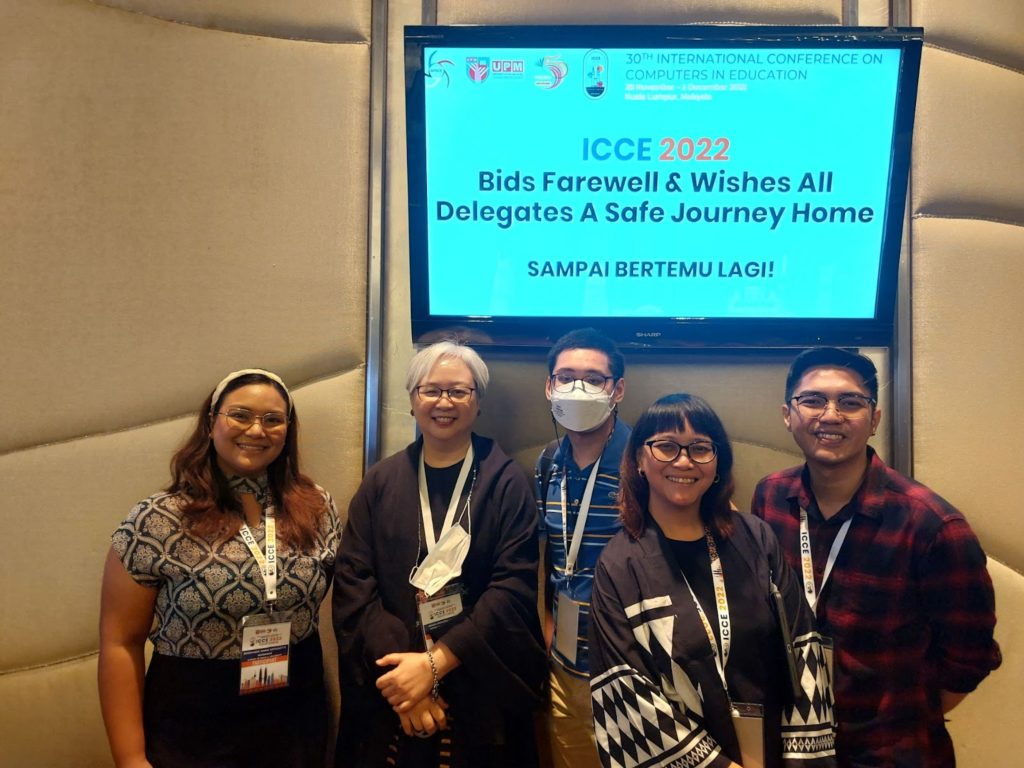
In photo: ALLS team at the closing ceremony of ICCE 2022
There were a lot of interesting research being undertaken by other educators, students and organizations that participated in the conference. The ALLS team was fortunate to have been able to meet the said participants in-person, and exchange experiences of best practices that inspire current and future work of the laboratory.