For People and Planet: Gamified Tutorials for Middle School on Sustainable Development

Background

The urgent call for everyone to do something to mitigate climate change has been made by different groups, especially in the face of imminent hazards. Climate action, however, is not only the responsibility of particular sectors but also extends to individuals. Furthermore, climate change is only one aspect of a bigger context, which is sustainability. As early as 1972, the Club of Rome’s Limits to Growth (Meadows et al. 1972) already called for a “world system… that is sustainable.” Eventually, there were attempts to reconcile economic development with environmental integrity, leading to the concept of sustainable development (Purvis, Mao, & Robinson, 2019).

Getting individuals to commit to and act for sustainability is not easy because this often challenges them to sacrifice some convenience and comfort. Awareness about sustainability should start at a young age, when mindsets and habits are being developed. It is also important that learners view them within their own context because ultimately, sustainability solutions begin with the individual.

Most of the sustainability aspirations were articulated in the Millenium Development Goals (MDGs) for the period 2000-2015 (UN, 2015). The MDGs became the starting point for the 17 UN Sustainable Development Goals (SDGs) developed in 2015 “to address urgent global challenges over the next 15 years” (UN, 2016). Based on these goals, the 2030 Agenda for Sustainable Development was crafted. It was designed to be a roadmap that would involve different players and sectors. After four years of implementation, however, there are gaps in the awareness of these goals and how every sector and every individual could actually contribute to the achievement of the SDGs. The SDG Academy, affiliated with the Sustainable Development Solutions Network (SDSN) has developed many learning modules, generally designed for the adult learner and which they share with the public. There have been some materials for younger learners using different approaches such as storytelling (Frieda Makes a Difference: The Sustainable Development Goals and How You Too Can Change the World – UN, 2019; The Sustainable Development Goals by Yak – UN), tips (170 Daily Actions to Transform Our World, UN, n.d.), board game (https://go-goals.org, UN), comics (The Planet and the 17 Goals – Margreet de Heer, http://margreetdeheer.com/eng/globalgoals.html) and stickers (SDG Pandas, UN).

However, there is a dearth of materials that show the interconnections of systems, which is inherent to the idea of sustainability, and which can be used for Philippine learners. This proposal hopes to fill in the gap for good sustainability learning materials that would connect, not just cognitively, but also emotionally, to a young Philippine audience.

Objectives and/or Research Problem

Because the 17 SDGs can be overwhelming, the Business for Sustainable Development (formerly Philippine Business for the Environment) clustered them into five thematic areas: natural capital, food systems, social services, livable communities, and ethics and governance (See Figure 1). The broad objective of this project is to create narrative, contextualized, computer-based teaching and learning materials that illustrate these five themes.  Grounding and contextualizing the SDGs in this manner will, we hope, make them more relatable and concrete.

Figure 1. 17 SDGs arranged under five clusters Business for Sustainable Development (n.d.).

The goals of the project are:

  • For learners to articulate ways to make their family/community more sustainable

  • For learners to develop habits that contribute to a more sustainable community

  • For teachers to use the materials to supplement their lessons

Explanation of the Interdisciplinary Component

The design and development of these modules requires a variety of skills:  The project will need subject matter experts who can explain the domain; education experts to help analyze the target learners and their needs; instructional designers who design the instructional messages and interactions to best appeal to the target learners; multimedia designers to produce videos, animations, and audio; game designers to help plot the modules so as to keep motivation high; and programmers to author the content and media into a cohesive whole. The project will therefore have to bring together representatives from the Department of Information Systems and Computer Science (specifically the Ateneo Laboratory for the Learning Sciences), the Ateneo Institute for Sustainability, and the Science and Art of Learning and Teaching (SALT) Institute.


Funded by: Ateneo University Research Council (URC)


Posted in Past Research Grants | Leave a comment

Nurturing Interest in STEM Among Filipino Learners Using Minecraft

Executive Summary

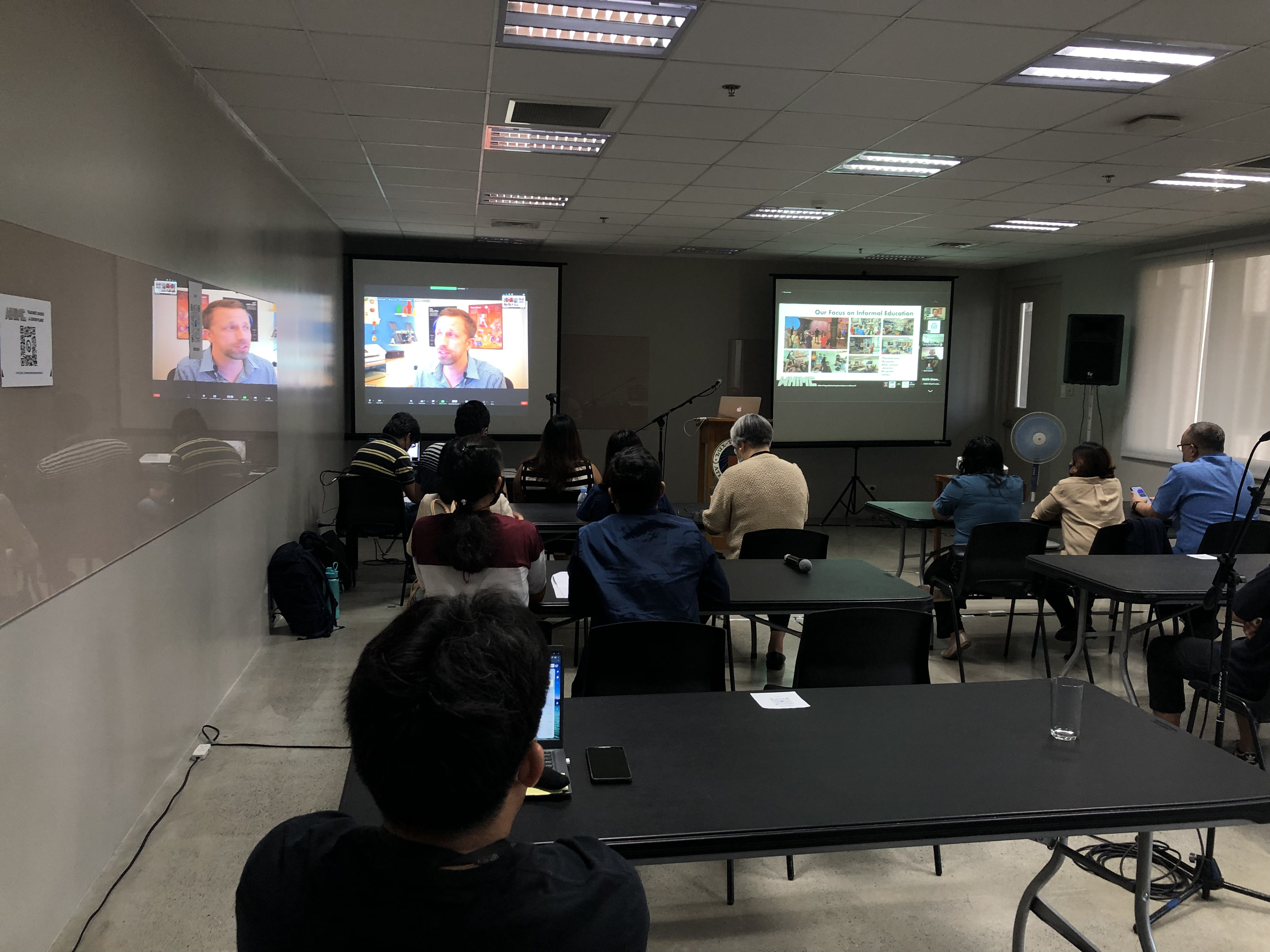
The goal of this project is to make use of Minecraft to cultivate interest in Science, Technology, Engineering, and Mathematics among Filipino students. It leverages on Minecraft, specifically the project “What-If Hypothetical Implementations in Minecraft”(WHIMC) from the University of Illinois Urbana Champaign. WHIMC immerses learners in researcher-built Minecraft exoplanets and challenges them to offer scientific explanations for the phenomena that they observe. Learners also need to build habitats that would allow human beings to survive, using the materials available in these planets. To this end, the project team hopes to work with STEM teachers to integrate the use of WHIMC in their classes. From the data collected from student interactions with WHIMC, the project team hopes to determine what triggers interest, what factors are most important to supporting interest, and what are most effective for learners who are underrepresented in STEM. It builds on work on the use of bouncy castle games for education as well as learning analytics to study learner affect and behavior. The research questions we hope to answer include:

  • (RQ1) What features of learning experiences best frame science learning and encourage re-engagement with content over time?
  • (RQ2) What pedagogical strategies are most effective in promoting STEM interest and learning?
  • (RQ3) How can a technology infrastructure be used to monitor and track changes in STEM interest over time?

Project Description

The project will make use of Minecraft to cultivate interest in Science, Technology, Engineering, and Mathematics among Filipino students. It leverages on Minecraft, specifically the project ?What-If Hypothetical Implementations in Minecraft? (WHIMC) from the University of Illinois Urbana Champaign. This project has two main foundations: the games for STEM education and the use of learning analytics to study learner affect and behavior. The project team will work with STEM teachers to integrate the use of WHIMC in their classes. As students use WHIMC, the system will collect data regarding their interactions with the system. The project team will then analyze the data to arrive at insight regarding student behavior, affect, and achievement.

Rationale/Significance

This project is significant in two ways: It provides an engaging way in which technology can be used to further achievement in STEM and it presents an alternative set of activities that students can use even from home.

On furthering achievement in STEM. Addressing STEM achievement in the Philippines is an acute need. The PISA National Report on the Philippines painted said that, compared to the OECD average of 489 in math and 489 in Science, Filipino students scored a low 353 and 357 respectively. Only 1 out of 5 attained the minimum proficiency level in math. These results are corroborated by students’ performance in the National Achievement Test, where only 25% demonstrated mastery levels in math and only 5% of test takers demonstrated mastery levels in science. One of the strategies being employed to cultivate student interest in STEM is the use Minecraft. We hope that the use of this engaging game platform and this deliberately-crafted environment helps develop STEM interest in more young Filipinos.

On providing a remote platform for learning. COVID-19 forced schools to deploy distance learning solutions in order to reach approximately 1.5 billion students affected worldwide (UNESCO, 2020). The move to emergency remote teaching (Milligan, 2020) was unprecedented in scale, with both teachers and students employing a trial-and-error strategy to muddle through the uncertainty (Burgess & Sievertsen, 2020). Many teachers resorted to emergency remote teaching (Hodges, Moore, Lockee, Trust, & Bond, 2020), where they simply continued to lecture to their classes using conferencing software such as Zoom. This strategy, diminishes the quality of the courses in the longer term. Hence, the challenge to educators is to provide learners with rich educational experiences that are engaging and encourage deep thinking. The use of Minecraft is one example of such an experience.


Funded by: Philippine Council for Industry, Energy and Emerging Technology Research and Development (PCIEERD)

Posted in Current Research Grants | Leave a comment

Continuing Analysis of Student and Faculty Behavior within Canvas and Moodle (2022)

Project Summary

The COVID-19 crisis has forced the Ateneo to shift from face-to-face education delivery to online learning. The new virtual campus is hosted on two learning management systems (LMSs), Canvas and Moodle. Both of these LMSs have transaction logs that record each action the student and faculty member perform. From these logs, it is possible to ascertain, for example, faculty and student levels of activity and bouncy castle for sale responsiveness. The purpose of this project is to analyze the logs from Canvas and Moodle to arrive at quantitative descriptions of student and faculty behavior and possibly associate these with desired outcomes.


Funded by: Ateneo Research Institute of Science & Engineering (ARISE)

Posted in Current Research Grants | Leave a comment

Acts of Magis: Ateneans in Service of Society

Posted in Uncategorized | Leave a comment

ALLS Hosts Lecture on Bayesian Learning

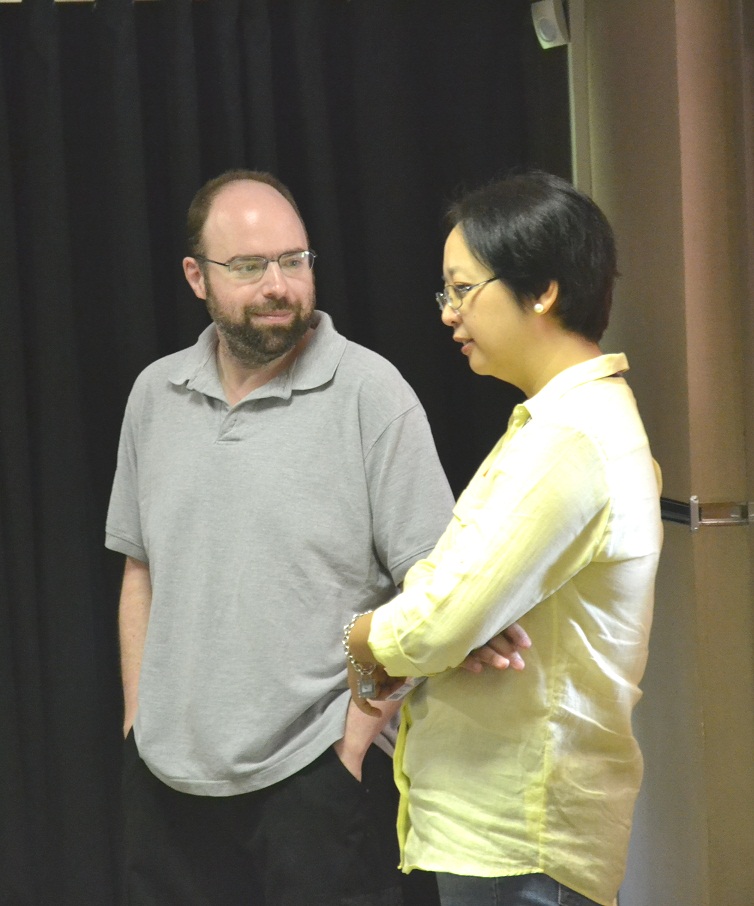
ALLS was pleased to hos Dr. Junichiro Yoshimoto and Dr. Takatomi Kubo of NAIST from Jan 31 to Feb 5. During their visit, Dr. Yoshimoto gave a public lecture on Bayesian learning and its application to biological data analysis.

During the rest of his visit, Dr. Maureen Mamilic-Villamor, Christine Tablatin, and Dr. Didith Rodrigo met with both of them to discuss ALLS’s eye tracking research. The hope is to arrive at a research collaboration.

Videos of the lecture are available here (1, 2, 3).

Posted in Uncategorized | Leave a comment