Integrating Computer Science and the Learning Sciences
Ateneo Laboratory for the Learning Sciences
Dr. Ma. Mercedes T. Rodrigo
Ateneo Laboratory for the Learning Sciences
14 January 2012, 8:00-12:00
Venue TBA
Department of Information Systems and Computer Science
Ateneo de Manila University, Loyola Heights, Quezon City
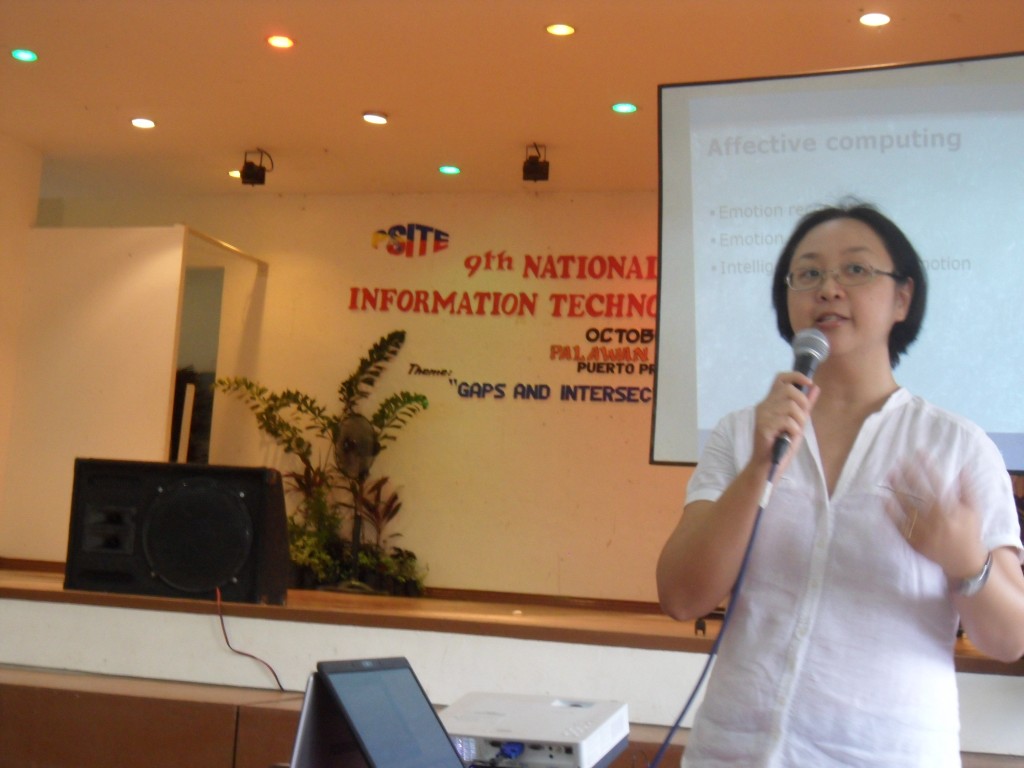
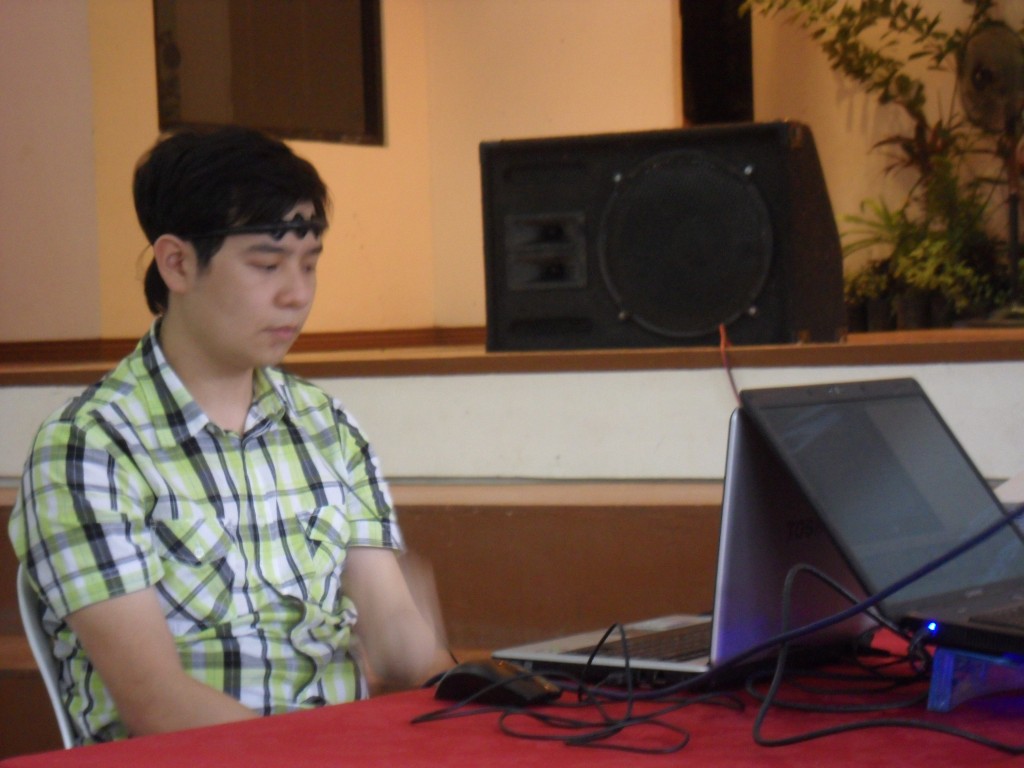
The Ateneo Laboratory for the Learning Sciences brings together artificial intelligence, data mining and statistics, education, cognitive psychology, human factors and other disciplines to study, enhance, and develop environments that improve student achievement and the learning experience. In this workshop, we will give participants an overview of laboratory’s goals and directions. We will discuss our work in affect and behavior detection and response in programming environments and intelligent tutors, as well as the design and development of interfaces that are sensitive to biometric readings and use behaviors. The purpose of this workshop is to acquaint fellow faculty members and current or prospective graduate students with our ongoing research, and in so doing to foster collaboration and encourage participation.
About Dr. Rodrigo: Dr. Rodrigo is an Associate Professor in the Department of Information Systems and Computer Science, Ateneo de Manila University and head of the Ateneo Laboratory for the Learning Sciences. Under her direction, the Ateneo’s Affective Computing group was recently named the first runner up of the CHED Best Higher Education Institution Research Award for NCR. Her research interests include affective computing, artificial intelligence in education, intelligent tutoring systems, and computer science education.
Game AI: Yesterday, Today, and Tomorrow
Dr. Taesik Kim
Keimyung University, South Korea14
January 2012, 1:00 to 5:30 (NEW TIME!!!)
Venue TBADepartment of Information Systems and Computer Science
Ateneo de Manila University, Loyola Heights, Quezon City
In many movies and science fiction stories, AI is one of the most popular themes of the story. Whether the characters have evolved to hate people and start eliminating all mankind, or fall in love with real people, they all share a common concept of ‘thinking and learning like humans.’ Unfortunately, in the real world, complexities of AI algorithms have not yet evolved to that point. In this lecture Game AI: Yesterday, Today, and Tomorrow, we will discuss true definition of artificial intelligence within games. All games are divided into two categories: perfect games and imperfect games. Game developers need to apply an appropriate game AI engine to maximize the user’s game experience in both types of games. Each AI engine is deigned to respond and react in specific situations in the game environment. Nowadays, due to the sharp increase of smart phone devices, mobile games are becoming a new popular playground for AI system engineers and game developers. However, since mobile phones contain many limitations, developers now face the difficulty of modifying previous AI engines to fit into mobile platforms. Moreover, going back to the actual concept of artificial intelligence, current concepts of AI algorithms are much further distanced from the ‘thinking and learning like human’ intelligence than AI which we see in movies and stories. We still have many steps which need to be climbed in the near future in order to create true artificial intelligence.
About Dr. Kim: Dr. Kim received his PhD in Computer Science from North Dakota State University. Since 1992, he has been a Prfessor in the Department of Game and Mobile Contents of Keimyung University in South Korea. He is also the Director the Cultural Contents and Technology Project Group of Keimyung University, a center dedicated to research and development in the area of game and mobile contents. His areas of specialization are artificial intelligence in games and the development of iOS based AI games.
Workshop costs and registration
The costs of the workshops are:
- P600.00 to attend both workshops. These fees cover lunch, two snacks, and handouts for both workshops.
- P400.00 to attend only one workshop. These fees cover lunch, one snack, and handouts for one workshop.
Payment procedures will be announced at a later date.
To register, please email the following details to Melinda Nicdao (mnicdao@ateneo.edu):
Subject line: Workshop(s) title(s)
Name:
Institutional Affiliation:
Designation: (e.g. faculty member, student, etc.)
Contact Phone Number:
Email Address:
For more information
Please email your inquiries to Melinda Nicdao (mnicdao@ateneo.edu).