Maria Mercedes T. Rodrigo delivered a keynote presentation at ACM Compute 2025, held on December 7–9 at IIT Ropar, India. Her talk, “Eye Tracking for Novice Programmer Research,” examined how eye-tracking technology can reveal the cognitive processes underlying how novice programmers read, understand, and debug code.
The keynote drew on the Ateneo Laboratory for the Learning Science’s series of empirical studies investigating both individual programmers and pairs working collaboratively. Dr. Rodrigo discussed how eye-tracking metrics such as fixations, saccades, and scanpaths can distinguish between high- and low-performing students, as well as between successful and unsuccessful programming pairs. These findings illustrate how differences in visual attention and reading strategies are closely tied to programming performance and learning outcomes.
ACM Compute 2025 brought together educators, researchers, and practitioners focused on computing education in the Global South, with an emphasis on evidence-based teaching, capacity building, and inclusive innovation. Hosted by IIT Ropar, the conference featured keynote talks, paper presentations, and workshops that highlighted research-informed practices for improving computing education across diverse contexts. Dr. Rodrigo’s keynote contributed a strong learning-sciences perspective, demonstrating how fine-grained data on learner behavior can inform more effective and equitable approaches to teaching computer programming.

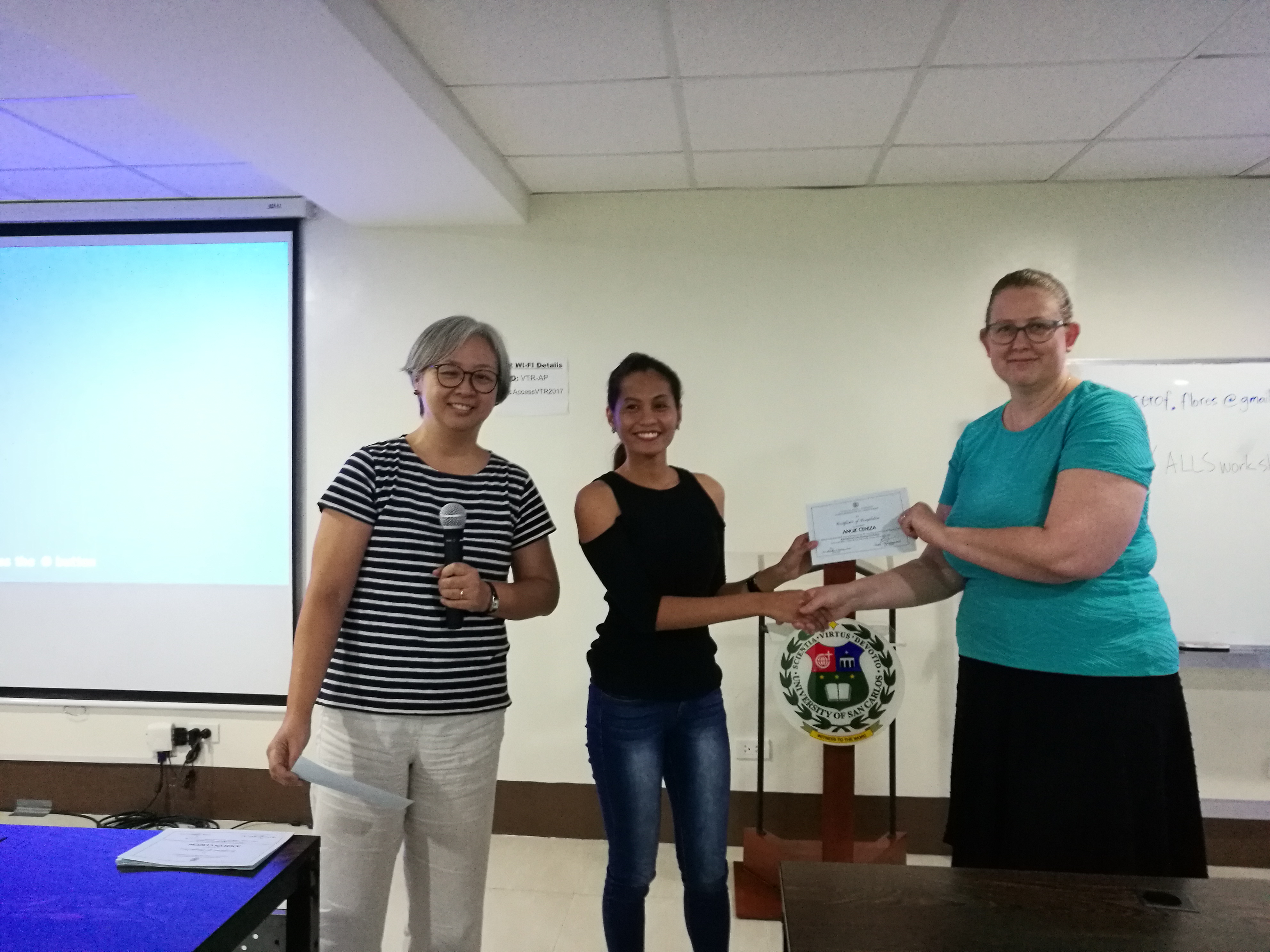
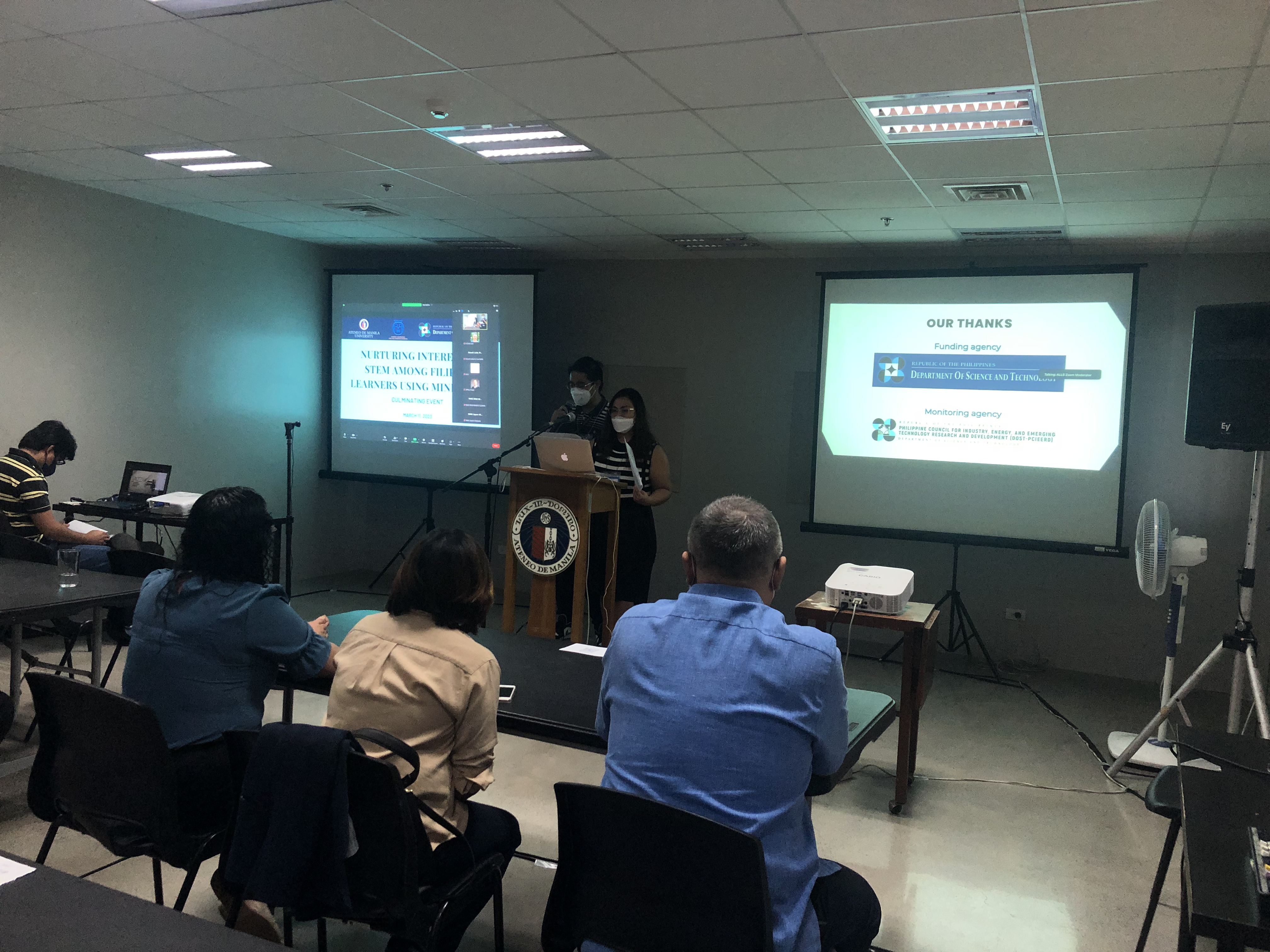
Dr. Rodrigo giving her keynote.

Dr. Viraj Kumar and Dr. Rodrigo.
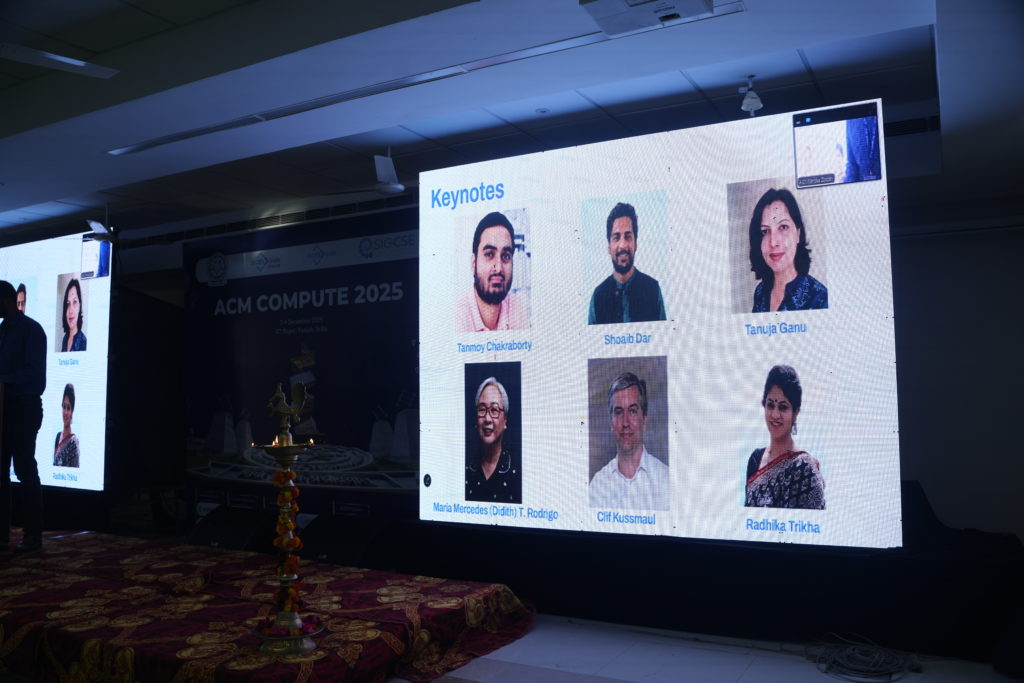
List of keynote speakers for Compute 2025.

Compute poster.