By Dr. Arnel Ocay
The Ateneo Laboratory for the Learning Sciences (ALLS), in collaboration with Ateneo Sandbox Programs, opened the year with two distinct activities on Artificial Intelligence in Education, held on January 16 and 17, 2026. The first lecture was held on January 16, followed by a seminar-workshop on January 17. Both activities featured Shamya Karumbaiah, Assistant Professor at the University of Wisconsin–Madison and Director of the Responsible AI for Learning (TRAIL) Lab.
The lecture on the first day focused on the potential of AI to address language boundaries in science learning, with particular emphasis on multilingual support and fostering translanguaging opportunities. Dr. Karumbaiah discussed how AI can support inquiry-based science learning by leveraging learners’ everyday language practices as resources for meaning-making. Drawing from teacher needs analyses and the Science and Language with AI (SLAI) initiative, the lecture positioned AI as a tool for bridging science content and language development, while also critically examining challenges associated with large language models, including linguistic bias, safety concerns, hallucinations, misinformation, and toxicity. The lecture concluded with a live demonstration of the SLAI app, showcasing how AI can enable multilingual and translanguaging interactions among students. Dr. Karumbaiah emphasized that AI, in this context, supports diverse forms of meaning-making in science learning by foregrounding learners’ cultural and linguistic assets. The lecture was attended by participants from fields such as language, science, and computing education.
The seminar-workshop on the second day centered on the responsible use of AI in education and brought together a multidisciplinary group of educators and AI-in-education enthusiasts from institutions across the country. Through guided discussions, collaborative activities, and shared reflections, participants examined ethical, pedagogical, and contextual considerations in AI adoption, including fairness, transparency, learner agency, assessment, and feedback. Drawing on their varied teaching contexts, participants engaged in a rich exchange of ideas, culminating in shared principles and practical insights for ethical, inclusive, and context-sensitive integration of AI in classrooms.
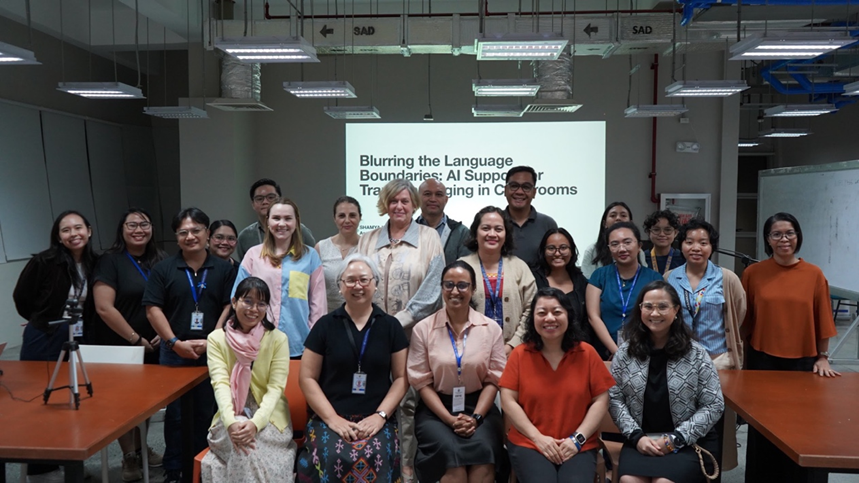
Day One: Participants in the AI Support for Translanguaging in the Classroom lecture with Dr. Shamya Karumbaiah and ALLS Head, Dr. Maria Mercedes Rodrigo. (Photo: Karlo Erfe, Sandbox Program, Areté, Ateneo de Manila University)
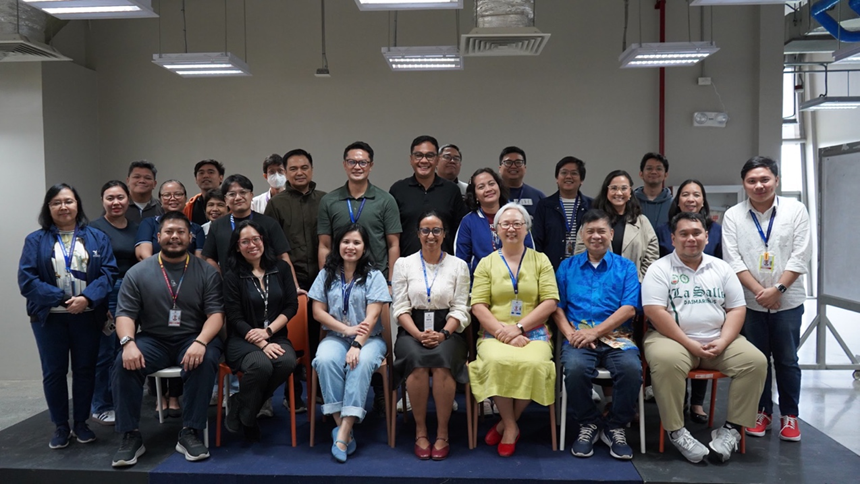
Day Two: Participants in the seminar-workshop on Responsible AI Use in the Classroom, together with Dr. Karumbaiah and Dr. Rodrigo. (Photo: Karlo Erfe, Sandbox Program, Areté, Ateneo de Manila University)
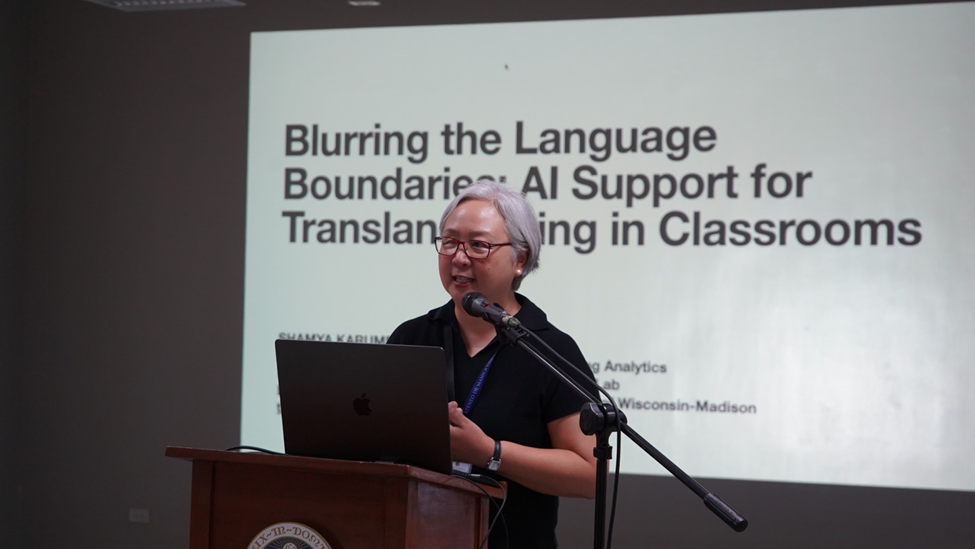
Dr. Rodrigo, Head of ALLS, welcomes the participants and introduces Dr. Karumbaiah on the first day of the lecture. (Photo: Karlo Erfe, Sandbox Program, Areté, Ateneo de Manila University)
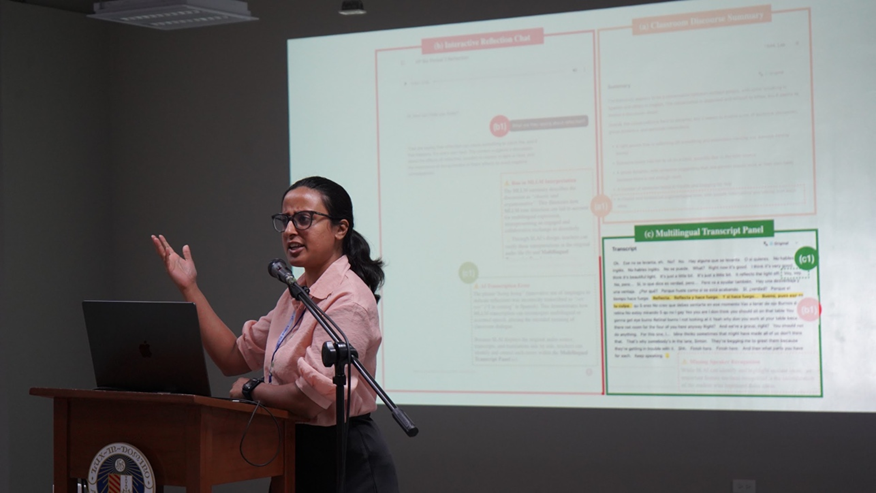
In her talk, “Blurring the Language Barriers: AI Support for Translanguaging in Classrooms”, Dr. Karumbaiah demonstrated how the SLAI app can support multilingual and translanguaging in the context of science learning. (Photo: Karlo Erfe, Sandbox Program, Areté, Ateneo de Manila University)
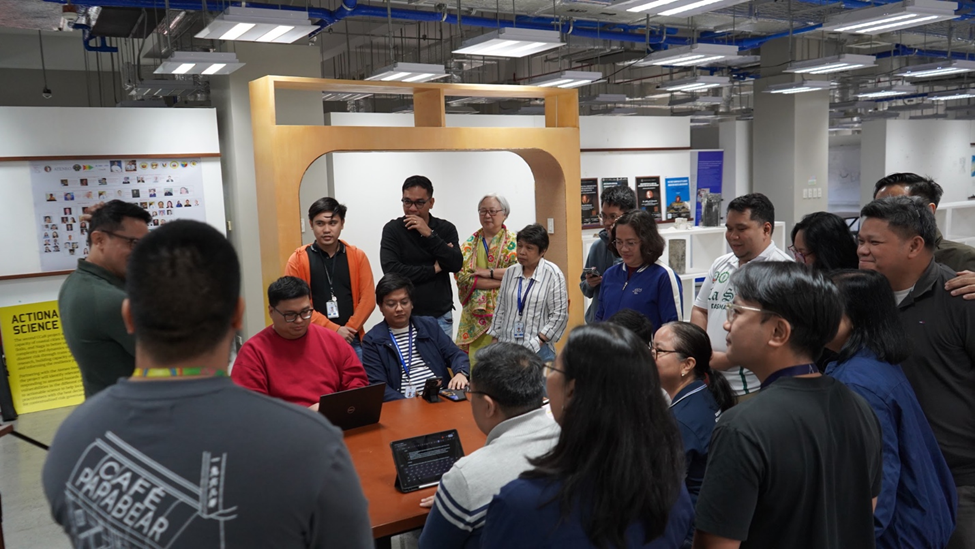
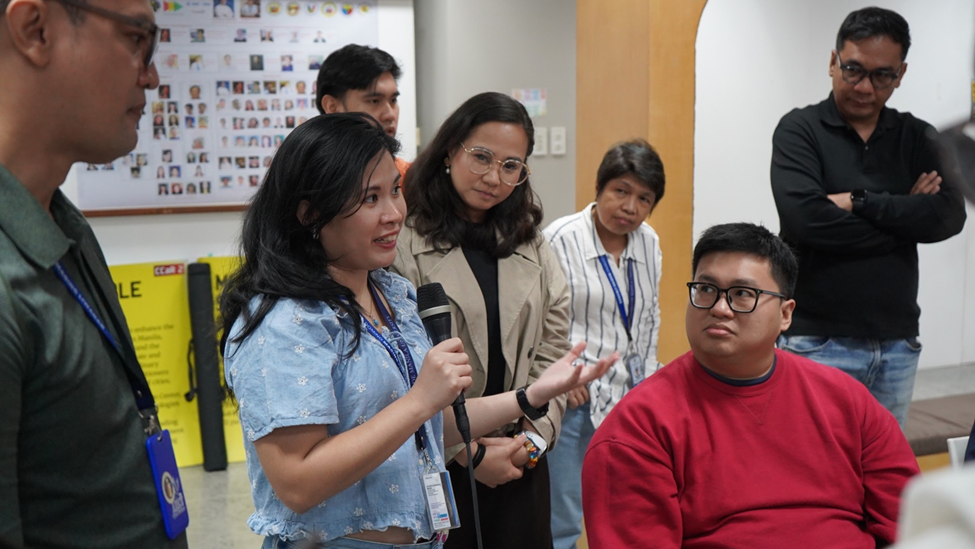
In one of Dr. Karumbaiah’s workshop activities, participants worked in groups to examine scenarios on the responsible use of AI in classrooms, focusing on whether specific applications of AI could be considered harmful, fair, and contextually appropriate in educational settings. (Photos: Karlo Erfe, Sandbox Program, Areté, Ateneo de Manila University)
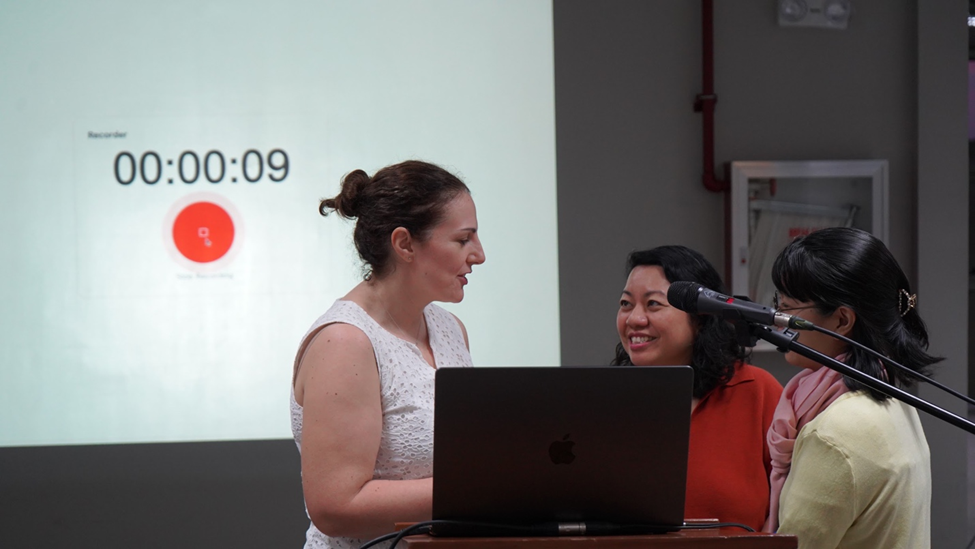
With the help of participants fluent in multiple languages, Dr. Karumbaiah invited attendees to actively explore and experience the translanguaging features of the SLAI app, demonstrating how it supports multilingual interaction. (Photo: Karlo Erfe, Sandbox Program, Areté, Ateneo de Manila University)