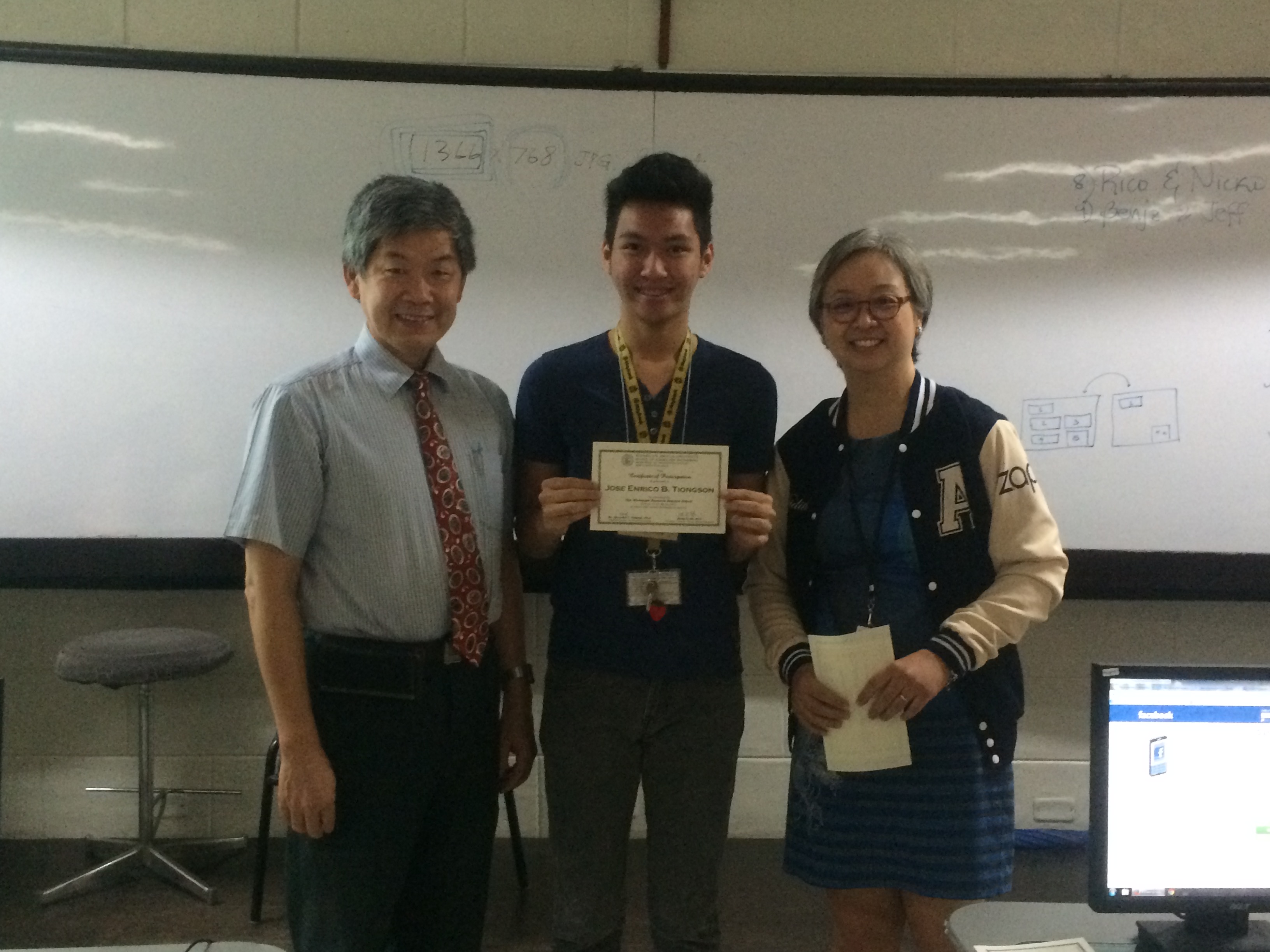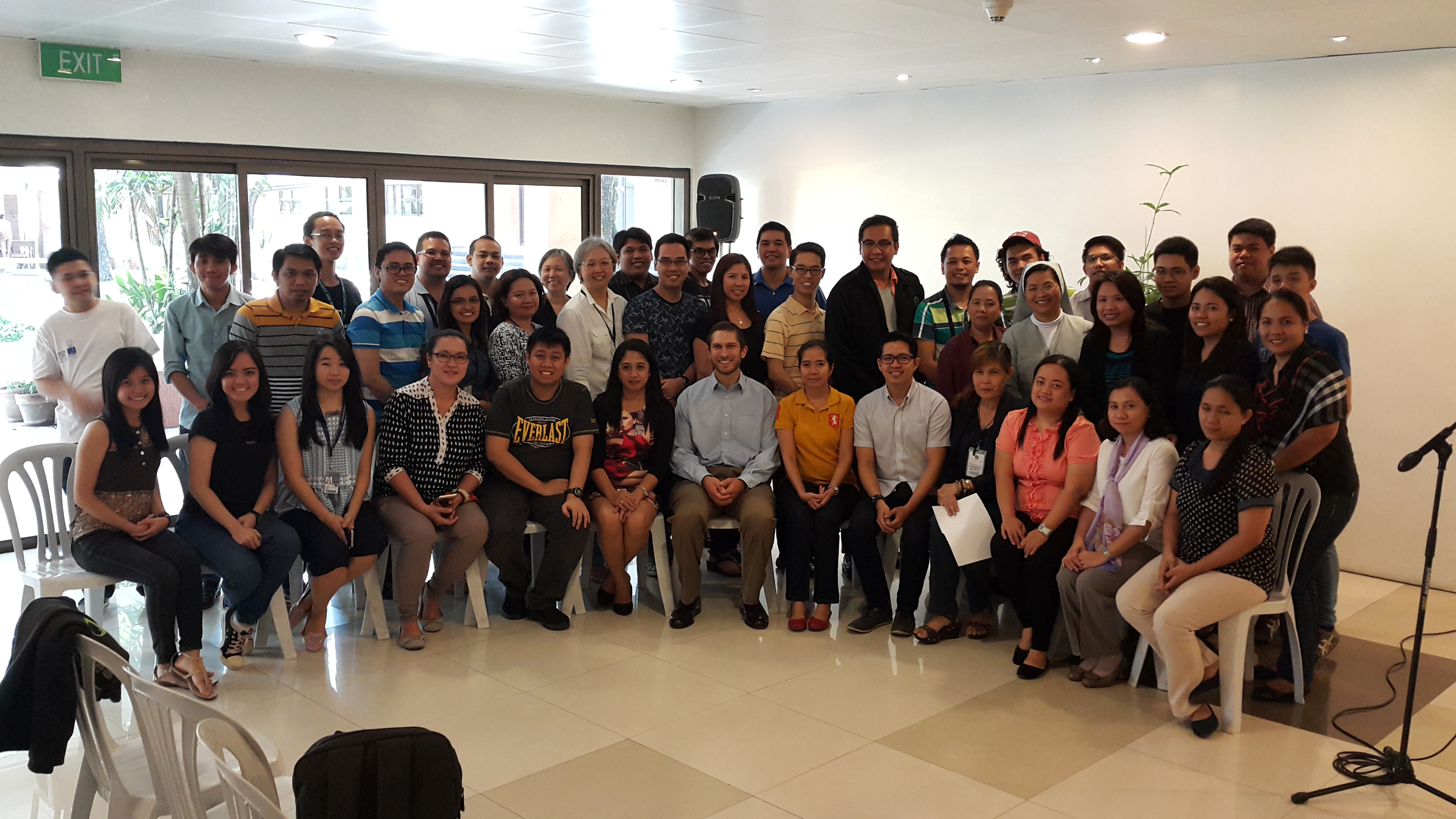
Educational Data Mining Summer School

26-30 May 2014, 8:30 to 4:30
Room CTC 112

Hosted by:

The Ateneo Laboratory for the Learning Sciences
Department of Information Systems and Computer Science
Ateneo de Manila University, Loyola Heights, Quezon City

In cooperation with

The Educational Data Mining Laboratory
Teachers College, Columbia University
New York, New York

Resource Speakers:

Jaclyn Ocumpaugh, Ph.D.
Teachers College, Columbia University

Ma. Mercedes T. Rodrigo, Ph.D.
Ateneo de Manila University

The Ateneo Laboratory for the Learning Sciences (ALLS) is a research office that lies at the intersection of computer science and education. The Educational Data Mining Laboratory of Teachers College, Columbia University is headed by Dr. Ryan Baker, President of the International Educational Data Mining Society and Associate Editor of the Journal of Educational Data Mining. Both laboratories make use of statistical and data mining techniques to investigate behavioral and affective phenomena that mediate learning. These include in depth examinations of learning outcomes, prediction of STEM career choice, student help-seeking, carelessness, and conscientiousness as well as patterns of student confusion, frustration, and boredom.

The goal of the ALLS Summer School is to assist participants explore the quantitative analysis of student interactions with computer-based learning environments to derive insights about how students learn best. The Summer School will begin with a poster presentation in which participants will discuss their current work. The Summer School continues with an intensive five-day workshop that will familiarize participants with the data collection and analysis techniques that ALLS uses to conduct its research. Ample time will be provided for hands-on work. Each participant will be expected to produce a data analysis. The workshop ends with poster presentation in which resource people will critique student work and recommend ways in which the work may be extended.

The Summer School is open to current or prospective graduate students who wish to learn more about the learning sciences and its associated methods. The tentative schedule of activities is as follows:

26 May 2014
Introduction of participants
Poster presentations
Introduction to the learning sciences
Video annotation
Field observation methods

27 May 2014
Low-fidelity text replays annotation
Reliability checks
Sample interaction logs
Exploratory analysis

28 May 2014
Educational data mining

29 May 2014
Educational data mining

30 May 2014
Poster preparation
Poster presentations

To apply, prospective participants must email a 2-3 PDF document (12-point Times New Roman Font, 1 inch margins on all sides, double spaced) with the following information to Ma. Mercedes T. Rodrigo (mrodrigo@ateneo.edu) by 31 March 2014:

Full name
Email address
Institution
Position
Highest degree earned or ongoing studies
Describe background in statistics and data mining. What statistics or data mining packages have you used? What techniques are already familiar to you?
If you are not currently enrolled in a graduate degree program, are you planning to enroll in graduate school? What is your time line? What specialization do you intend to pursue?
Why are you interested in attending the ALLS Summer School? How is it relevant to your current or future work? How do you see yourself applying what you learned? (The response to this question must be 500 to 600 words long.)

Successful applicants will be allowed to attend the Summer School free of charge. They will, however, be responsible for their own transportation, meals, and lodging. Current graduate students also have the option of officially registering for this course and taking it for credit as CS 214 User Modeling and User Profiling for Adaptive Systems.

Slots are limited, so please apply soon!
Posted in Summer School | Leave a comment

Augmented Reality Summer School

21-25 April 2014, 8:30 to 4:30
Room CTC 112
Ateneo Laboratory for the Learning Sciences
Department of Information Systems and Computer Science
Ateneo de Manila University, Loyola Heights, Quezon City

Augmented reality refers to the superimposition of digital information on the real world. The additional layer provides the user with information that enables him to accomplish real-world tasks. Augmented reality has applications in many fields including the assembly, maintenance, and repair of complex machinery; as a visualization or training aid for surgery; for games and other forms of entertainment; and for the annotation of environments with public or private information.

The Augmented Reality Summer School is an intensive five-day workshop focused on designing and creating augmented reality applications. Resource speakers from the Interactive Media Lab of Nara Institute of Science and Technology (NAIST) in Japan will familiarize participants with augmented reality development toolkits, best practices for design and development, and opportunities for the technology’s application. By the end of the workshop, the participants will produce an augmented reality application. Resource people will critique the application and provide recommendations as to how it might be extended.

The Summer School is open to current or prospective graduate students who wish to learn more about augmented reality, its applications, the development of these applications, and how AR might be instrumental in thesis or dissertation research. The tentative schedule of activities is as follows:

April 21 – Introduction to AR, applications, familiarization with the dev enviornment
April 22 – ARToolKit
April 23 – ARToolKit
April 24 – ARToolKit
April 25 – Finalization of programs, presentation and critiquing

To apply, prospective participants must email a 2-3 page PDF document (12-point Times New Roman Font, 1 inch margins on all sides, double spaced) with the following information to Ma. Mercedes T. Rodrigo (mrodrigo@ateneo.edu) by 31 March 2014:

Full name
Email address
Institution
Position
Highest degree earned or ongoing studies
Describe your programming skills. What computer languages do you already know? On what systems or platforms have you programmed?
If you are not currently enrolled in a graduate degree program, are you planning to enroll in graduate school? What is your time line? What specialization do you intend to pursue?
Why are you interested in attending the Augmented Reality Summer School? How is it relevant to your current or future work? How do you see yourself applying what you learned? (The response to this question must be 500 to 600 words long.)

Successful applicants will be allowed to attend the Summer School free of charge. They will, however, be responsible for their own transportation, meals, and lodging. Current graduate students also have the option of officially registering for this course and taking it for credit as CS295.O3 Multimedia Applications.

Slots are limited, so please apply soon!
Posted in Summer School | Leave a comment

ALLS Welcomed a Summer Intern from Philippine Science High School, Visayas

ALLS was pleased to host a summer intern from Philippine Science High School, Eastern Visayas: Mary Josephine Co, or Marjo for short. Marjo is an incoming high school senior. She stayed with ALLS from April to May, 2013.

During her internship, Marjo worked with the Q Sensor in surveying whether or not electrodermal activity and skin temperature could predict a students’ engagement or interest.

About her first days in the lab, Marjo said, “Most of the days, I was just in the lab, familiarizing with the Q Sensor, what it does, what it can be used for, etc.” Using the Q Sensor, she conducted a survey on 75 psychology students.

Marjo explains, “So the experiment went like this: there were 75 psychology students invited to participate. There were videos shown to them, scenes from different movies of different genres (action, horror, comedy, romance, cartoon, drama, sci-fi). After seeing each video, they were asked to rate the video based on their level of engagement or how interesting/exciting they found it. While watching the videos, they were wearing the Q Sensor to keep track of their EDA and temperature. What we were trying to find out is if their ratings corresponded with their recorded EDA and temperature.”

Posted in News & Events | Leave a comment

DISCS recognizes ALLS group for Outstanding Thesis (Innovation Category)

During the Seniors’ Sendoff last March 20, DISCS gave the outstanding thesis
award (innovation category) to the group of Antonio Rafael Umali, Jian Paolo
Ablir, and Miguel Luis Sanchez. The group’s thesis was entitled Controlling
a Robotic Hand Using a Non-Invasive Brain-Computer Interface. DISCS
selected the outstanding theses awardees based on their standings during the
SOSE Awards for Research and Innovation. Of all DISCS entries, the group
had the highest standing.

Miguel Luis Sanchez, Jian Paolo Ablir, Antonio Rafael Umali, Jessica O. Sugay, Jose Alfredo de Vera

Posted in News & Events | Leave a comment

ALLS to present at the Artificial Intelligence in Education Conference 2013

The paper entitled Development of an Affect-Sensitive Agent for Aplusix by
Thor Collin Andallaza and Ma. Mercedes Rodrigo was accepted as a short paper
and poster at the Artificial Intelligence in Education Conference 2013 to be
held at the University of Memphis from July 9 to 13.

The abstract of the paper is as follows:

We compared two versions of an affect-sensitive embodied conversational
agent for Aplusix, an intelligent tutoring system for algebra. Version 1 of
the agent was able to detect and respond to user affect, but it responded
too quickly and too frequently. The second version of the agent featured new
student models for detecting and responding to student affective states,
which is less sensitive compared to the first version. We conducted a field
test with students to determine its effect on learning and learning
experience in comparison to using Aplusix alone and Aplusix with the version
1 agent. Results show that version 2 provided significantly fewer
interventions to engaged students, more evaluations of engagement, fewer
evaluations of boredom, and was generally preferred over version 1.

Posted in News & Events | Leave a comment