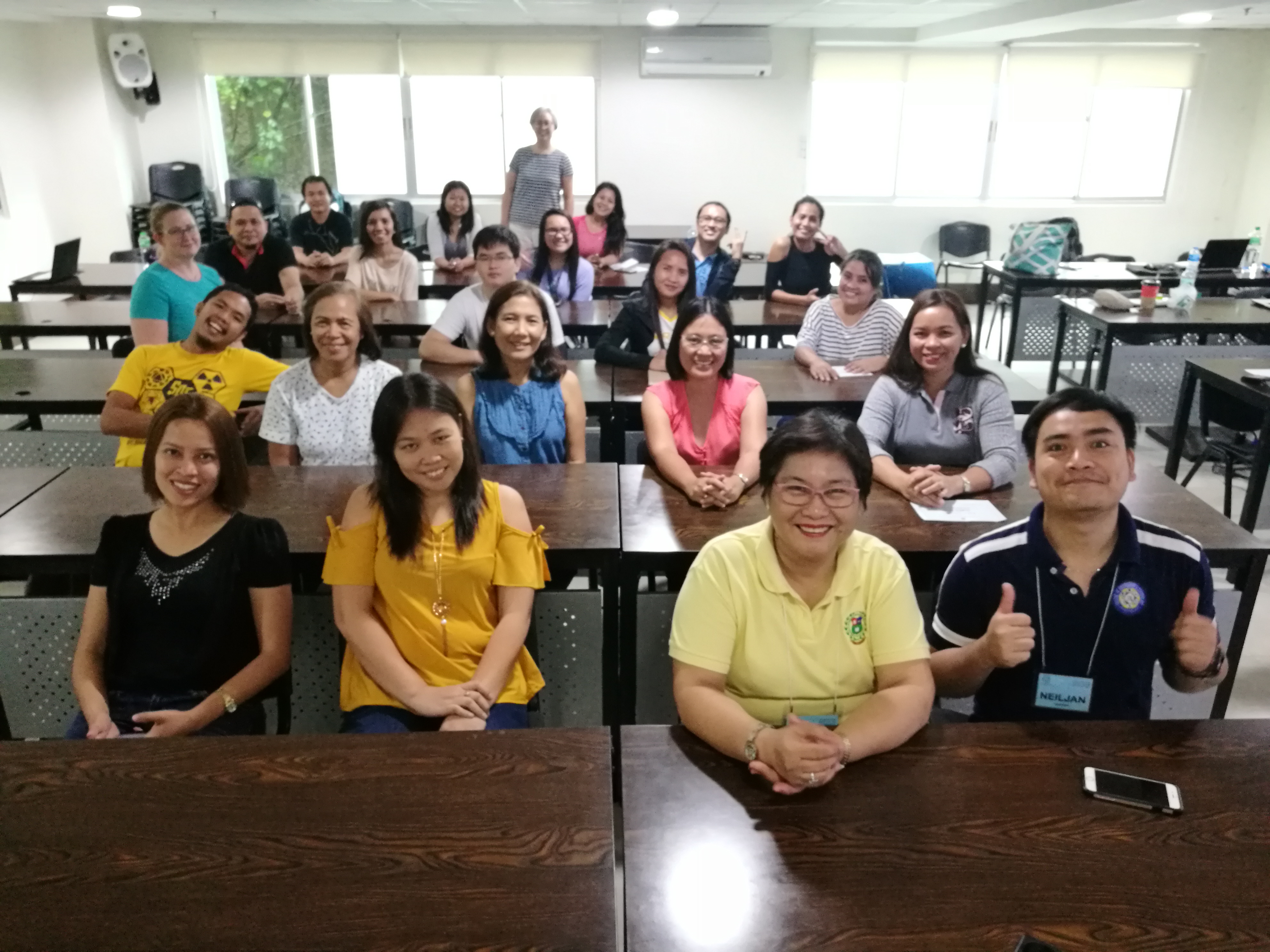
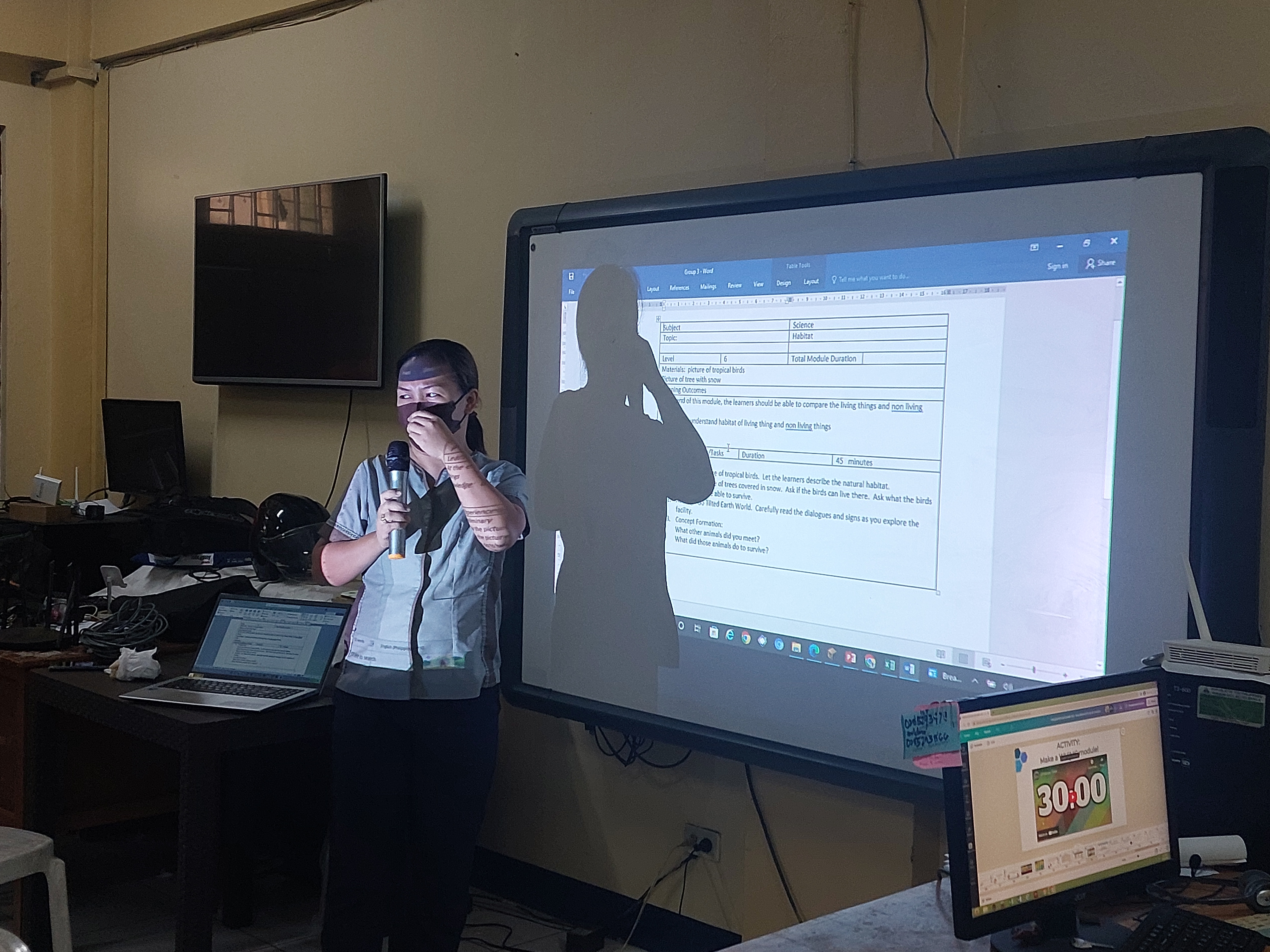
On December 4, 2023, the Ateneo Laboratory for the Learning Sciences (ALLS) was a guest speaker and workshop facilitator for Ayala Foundation × ProFuturo Project conference entitled “Learning Beyond Borders: The Power of E-ducation” to share our work of using the What-if Hypothetical Implementations in Minecraft (WHIMC) in classrooms!
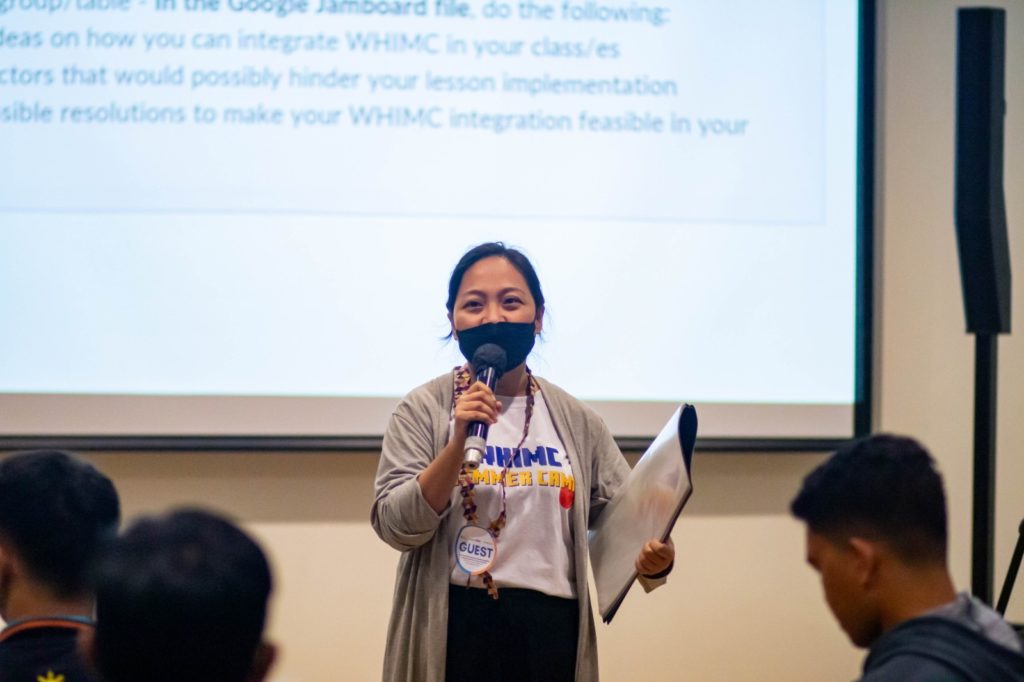
ALLS’ partner teacher Ms. Louise Tulayba facilitates the WHIMC Education workshop
Public school teachers from the MIMAROPA region were able to attend the talk and workshop, where they were introduced to Minecraft and its possible integration to STEM learning using WHIMC.
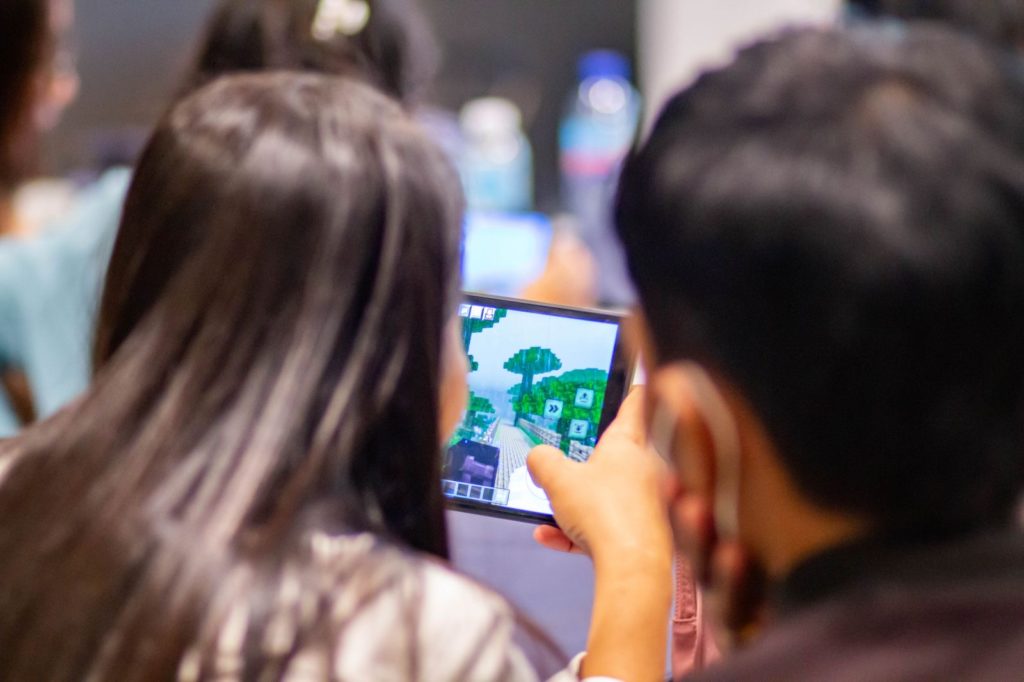
A teacher participant tries exploring a WHIMC world using a tablet
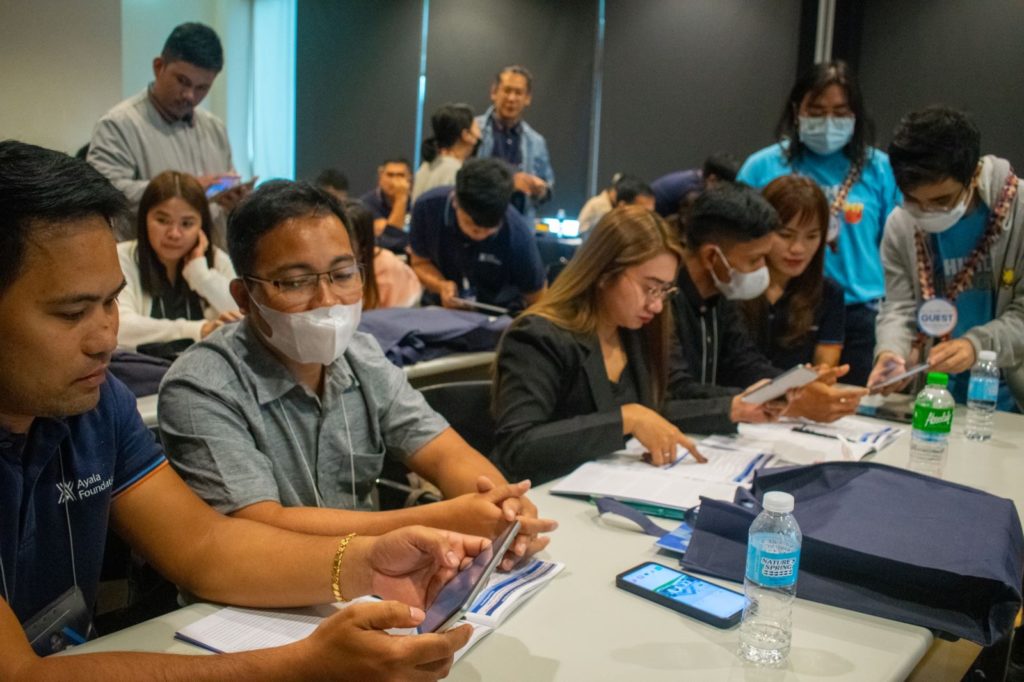
Teacher participants try out WHIMC Education with the help of ALLS student assistants (on the right)
As part of the workshop, the teacher participants were given the opportunity to explore the WHIMC worlds through Minecraft Education where they explored a Rocket Launch Facility, Earth with a Colder Sun and Earth with Two Moons simulations. Then, they were given the space to share their ideas on how they can use WHIMC in their own contexts, factors that would hinder the implementation of a Minecraft-based lesson and solutions proposed to overcome said hindrances.
We thank Ms. Louise Tulayba for representing ALLS, our student assistants and the Ayala Foundation for this opportunity to share about our project!
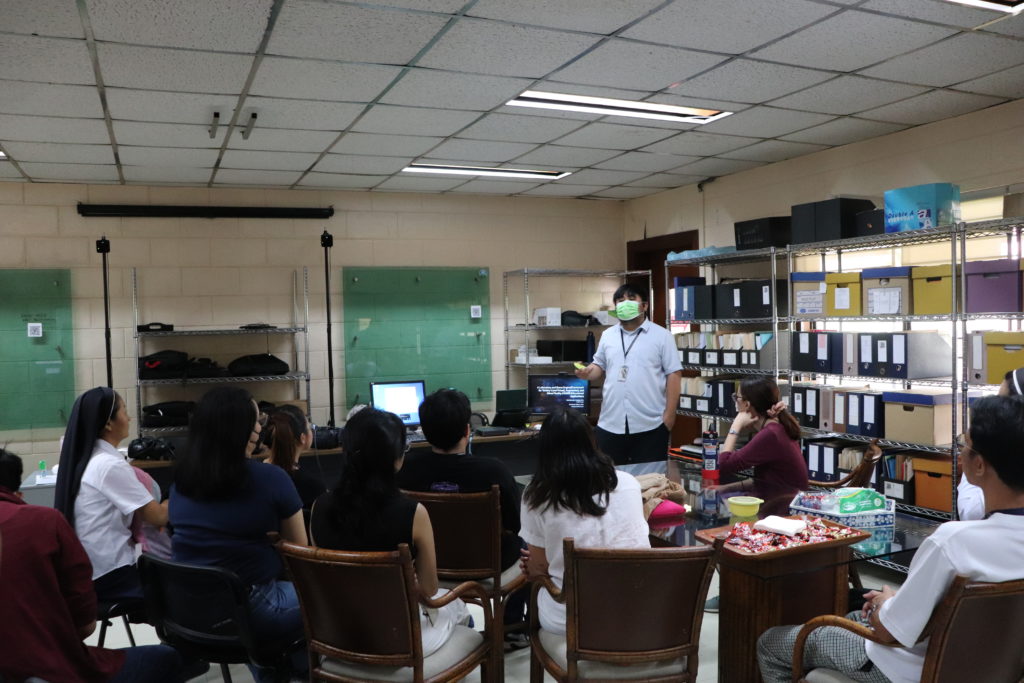
Last October 6, 2023, the Ateneo Laboratory for the Learning Sciences (ALLS) welcomed 18 students of the University’s graduate course EDUC 251: Media and Technology Applications under the care of Mr. Galvin Ngo for a session to introduce Virtual Reality, Augmented Reality, and Mixed Reality (VAMR) technologies developed by the laboratory through a project funded by the Department of Science and Technology – Philippine Council for Industry, Energy and Emerging Technology Research and Development (PCIEERD). The objective is to provide the graduate students an idea and opportunity to try for themselves on how such technologies operate, possibilities of implementation and integration in the field of education.
Sir Eric Vidal introducing the class to the VAMR Lab
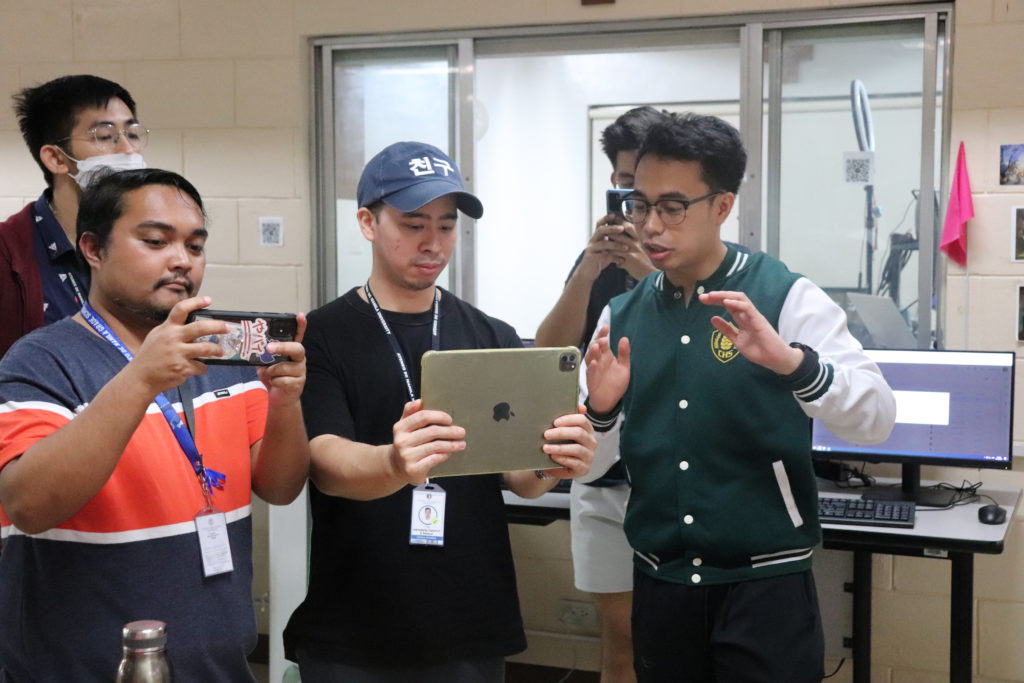
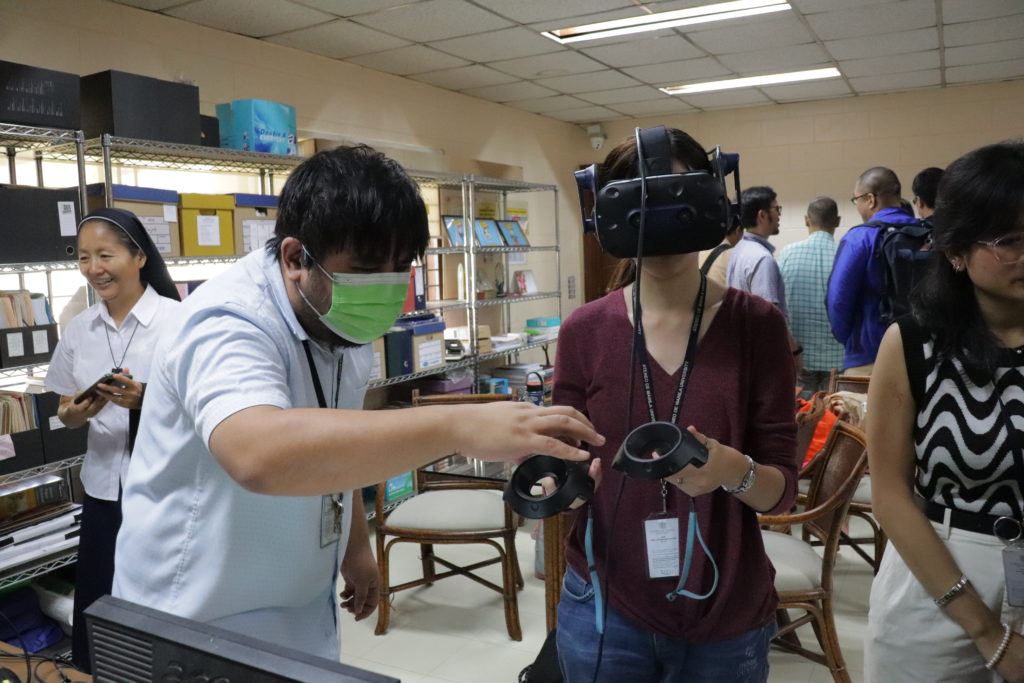
In the VAMR lab, the class was encouraged to try and tinker with the VR headsets and tablets equipped with AR software. The students were guided on how to operate these technologies by the facilitators of the event, Gerick Go, Kenneth Ko, and Joan Lee, who are part of the team of developers with the VAMR project funded by DOST-PCIEERD. Igpaw Loyola, which is the AR game installed in the tablets, had the player go around the Ateneo de Manila University campus with an AR avatar guiding the player on which locations to go. The main objective of the game is to defeat otherworldly beings scattered around the campus with the help of renowned Jesuits. On the other hand, the VR headsets allow the player to experience inventory management of VR objects and the interaction of these objects with a VR environment.
The students trying out the VR, AR, and MR technologyThe students trying out the VR, AR, and MR technology
With a proper orientation of what Virtual Reality, Augmented Reality, and Mixed Reality is, as well as trying these technologies first-hand, the class was deeply immersed in their current capabilities and potential applications in education. Then, an open forum was held after the demonstration and trial period to further discuss the limitations and challenges of integrating the technology in a classroom setting. Ideas on how to further improve the technology were also shared by the group. Overall, the event proved successful and can hopefully serve as a foundation for the class to explore opportunities for the technology to be incorporated in teaching and learning.
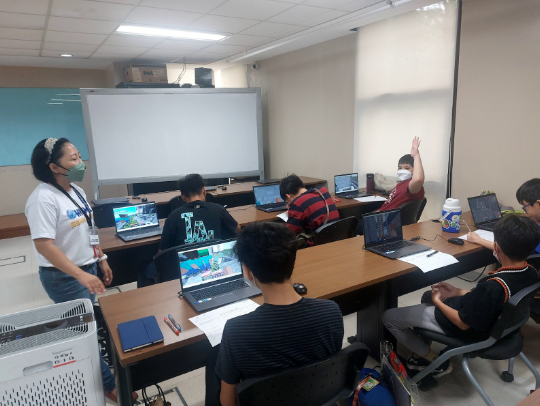
QUEZON CITY, PHILIPPINES – The Ateneo Laboratory for the Learning Sciences (ALLS), through its University Research Council (URC)-funded project entitled School Deployment of the What-If Hypothetical Implementations in Minecraft (WHIMC) organized a summer camp last July 25 to 26, 2023 for Grades 5 to 8 students wherein they explored the WHIMC worlds using Minecraft Java Edition.
WHIMC (What-If Hypothetical Implementations in Minecraft) is a collection of Minecraft worlds that aims to engage, excite, and generate interest and engagement in STEM through computer simulations. With this, the WHIMC summer camp allowed students to explore and interact with these WHIMC worlds to learn about topics in STEM, with the aim to create an educational experience that nurtures a continuing interest in STEM.
Each day of the summer camp included presentations, discussions, and gameplays of each WHIMC world to explore. The camp had specific module topics which helped the students answer questions such as “What if the Earth had no moon?”, “What if the Earth had a colder sun?”, and “What are exoplanets?”
Teacher Louise Tulayba calls on a summer camp participant on Day 1
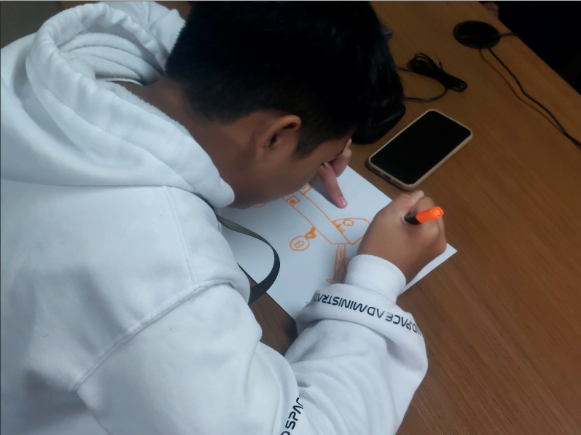
A summer camp student accomplishes his creative work
For the first camp day, the module focused on the exploration of a rocket launch facility and moon base. The participants had to “meet and talk” to the non-player characters (NPCs) in the WHIMC worlds assigned for the day and learn more about their roles and get information about the environment they were exploring. Based on the information they learned, the teacher-facilitator asked the participants to design their own moon base and choose the things they would need in order for the living things to survive.
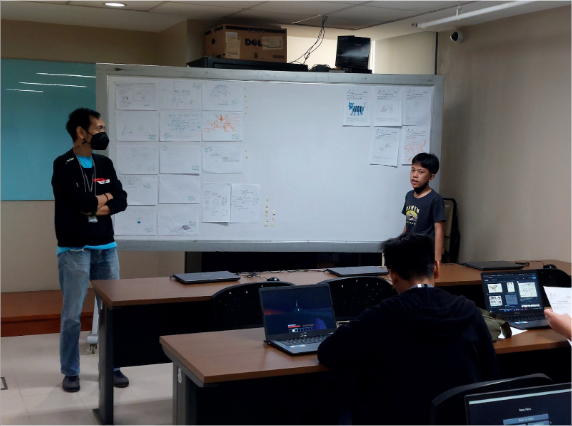
A summer camp student shares about his creative work output in front of the other participant
The second camp day focused on the exploration of a What-If Earth simulation and the exoplanets. For the first part of the session, the participants got a glimpse of how the Earth and its environment would be given certain conditions (i.e. no moon). They were asked to compare the difference of the data gathered such as wind speed, temperature and oxygen from an “unaltered” or regular Earth to an Earth with no moon. Then, the creative work challenge for the participants was to draw a creature that could survive in a What-If Earth condition of his/her choice. Meanwhile, the second part of the session focused on learning about the concept of exoplanets and seeing how it looks like based on actual research gathered from astronomers. The participants were asked to observe the characteristics of the exoplanets they have explored and compare data such as its temperatures, tilt and radiation, to name a few. Then, the participants were challenged to create their own exoplanets and define its features.
A total of 19 students from different basic education institutions attended the 2-day camp held on-site at the Ateneo de Manila University. For more information about WHIMC and sample lesson plans, visit https://go.ateneo.edu/ALLSWHIMCPage.
Dr. Eric Cesar Vidal of ALLS attended a VR/AR/XR Panel of ToyCon PH 2023, held last July 8, 2023 at the Music Hall Stage of SM Mall of Asia. This panel was among several panels hosted during the ToyCon event by Cybercraft Philippines, an association of creative professionals tasked with promoting original Filipino digital creative IPs.
The VR/AR/XR Panel discussed the current state and future of eXtended Reality (XR) development in the Philippines, and also showcased the on-going XR work of the ALLS VAMR (Virtual, Augmented and Mixed Reality) Laboratory.
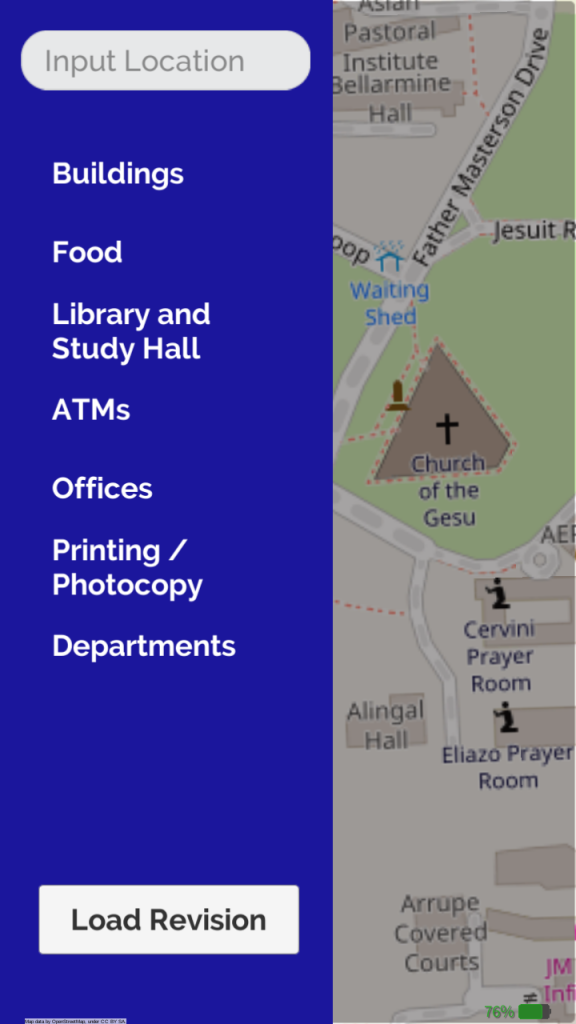
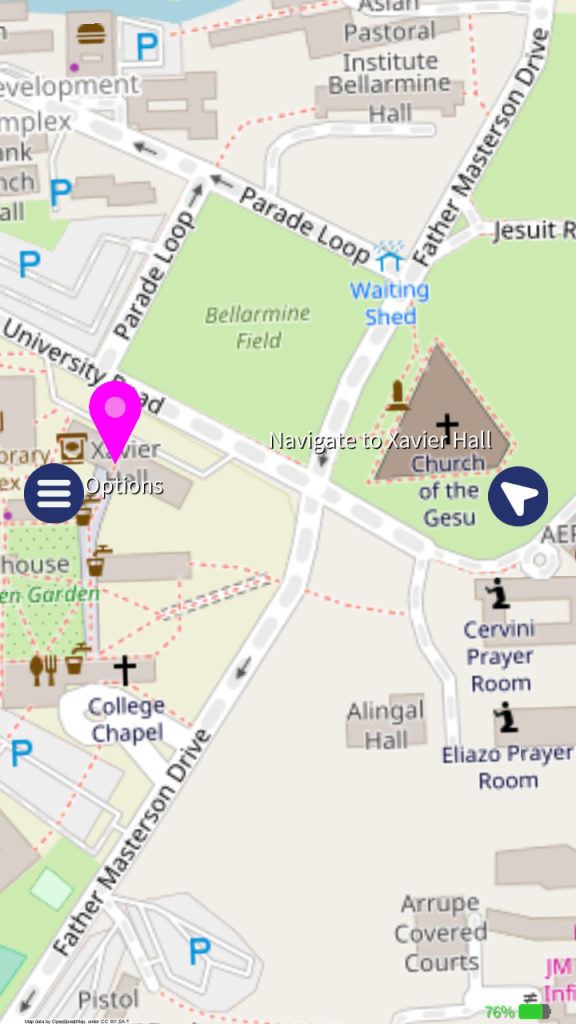
Journey through the Ateneo de Manila University Loyola Schools Campus with ease! Discover different places with Ateneo Navi and you will surely know your way around. This navigation app is targeted to international students, but can also be used by regular students of the Ateneo. Bonus: this works even without internet!