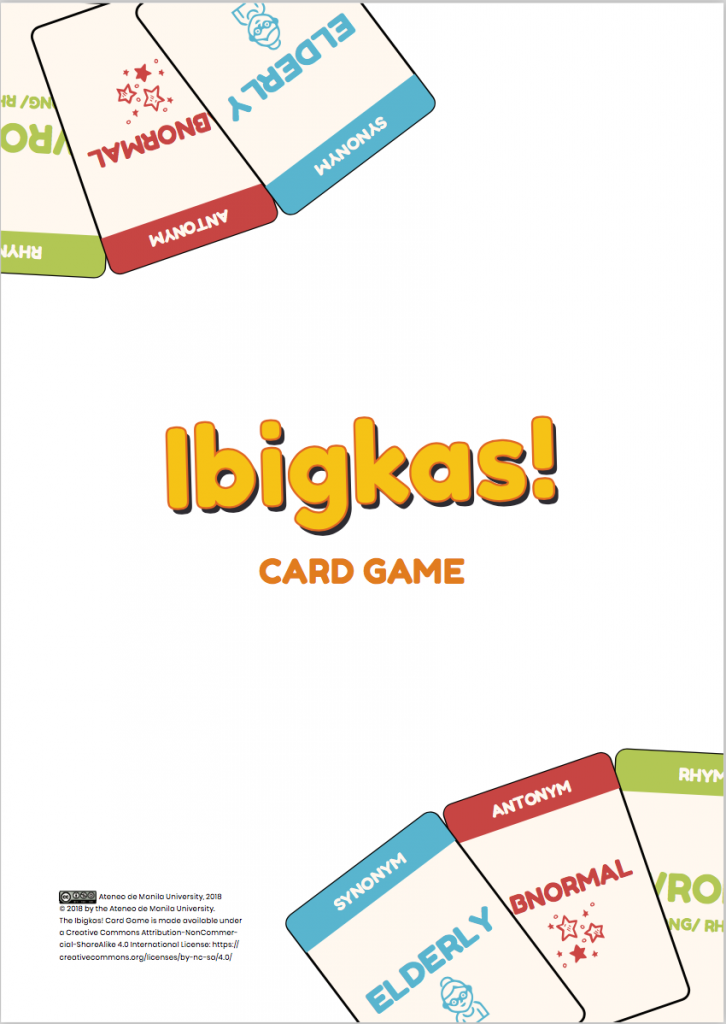
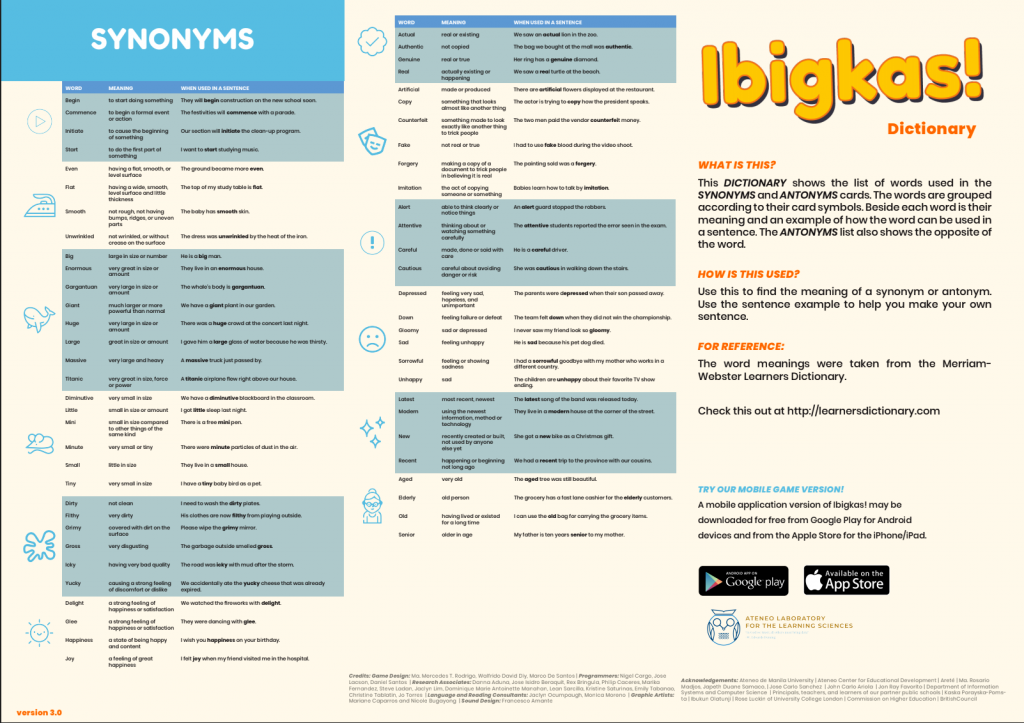
Ibigkas! has its own card game! Choose among the rhymes, synonyms, and antonyms decks, and work together with friends to make as many matches as you can. Print your very own copy now and take your learning wherever you want!
Improve your English language skills while shouting at your friends with Ibigkas! This drill-type game helps you practice rhymes, synonyms and antonyms independently or with a group of friends. Speak loud, speak fast, and work together to win.
Check the Ibigkas! User Guide for the complete steps of the game! Know how to get started, how to play the single player mode, and how to play multiplayer mode with friends. Have fun and help your friends learn how to play too!
ALLS reintroduces What-If Hypothetical Implementations in Minecraft (WHIMC) to the public with the continuation of the project, Nurturing Interest in STEM Among Filipino Learners Using Minecraft. This project aims to deploy WHIMC to other schools, specifically public schools to determine the impacts of using WHIMC and Minecraft in cultivating the interests of students in Science, Technology, Engineering, and Mathematics.
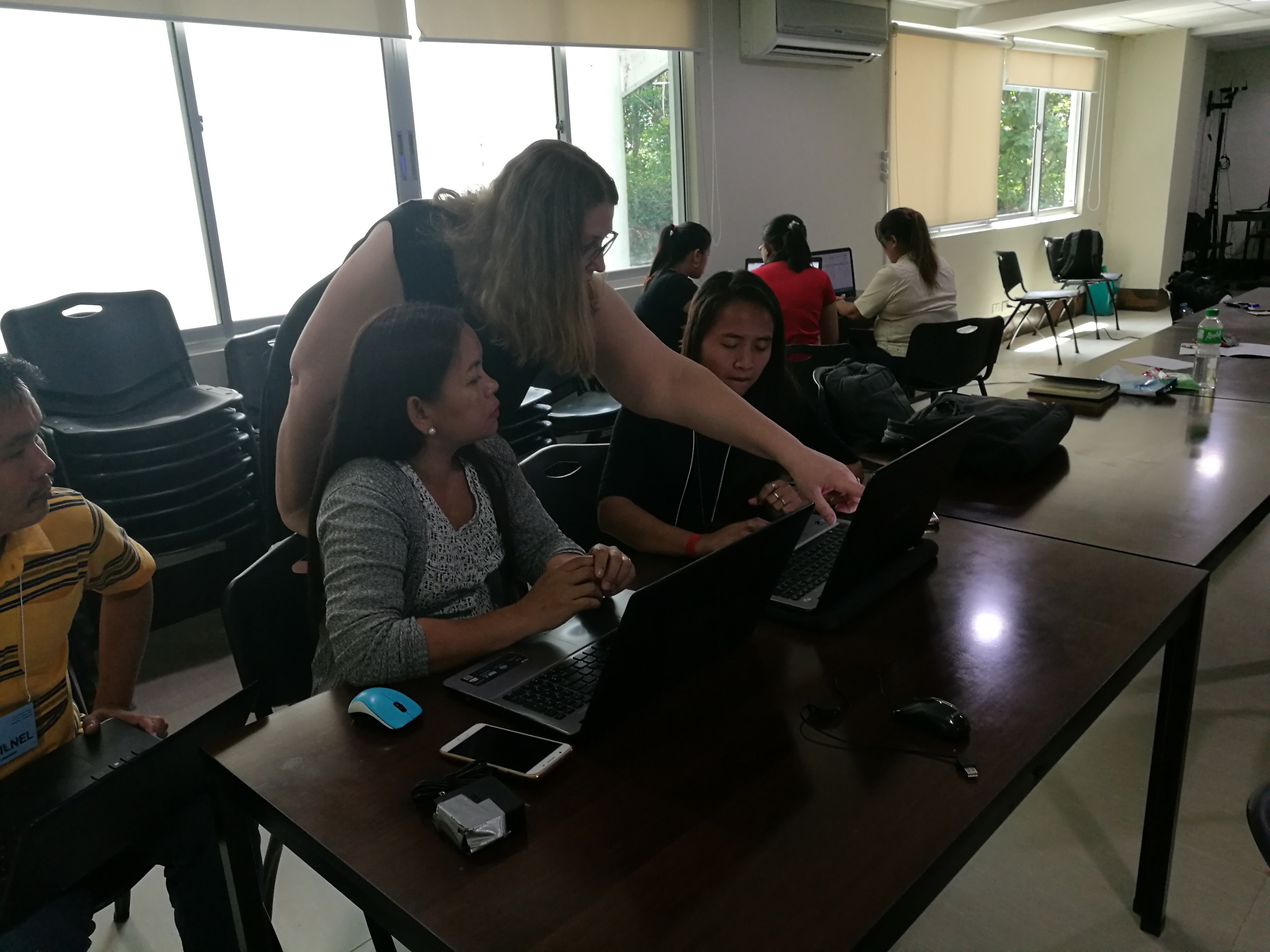
QUEZON CITY, PHILIPPINES – The Ateneo Laboratory for the Learning Sciences (ALLS) has conducted a series of teacher trainings for basic education teachers that focused on module development using the What-If Hypothetical Implementations in Minecraft (WHIMC) worlds. The goals were to introduce Minecraft and WHIMC to the teachers, and develop their skills on module or lesson plan development using WHIMC in their classes.
Through its project Nurturing Interest in STEM among Filipino Learners using Minecraft funded by DOST-PCIEERD, ALLS was able to conduct four (4) teacher training sessions in total – two online and two on-site trainings.
In March 2021, ALLS conducted one (1) online teacher training on the purpose and use of WHIMC in partnership with Dr. Jeff Ginger of the University of Illinois Urbana-Champaign (UIUC), a postdoctoral associate of the WHIMC project of UIUC. A total of six (6) teacher participants attended the training. ALLS then conducted another online teacher training on developing learning modules using WHIMC last May 2022, which was in partnership with the Ateneo Teacher Center. A total of sixteen (16) teachers have successfully completed the training requirements and received Continuing Professional Development (CPD) units.
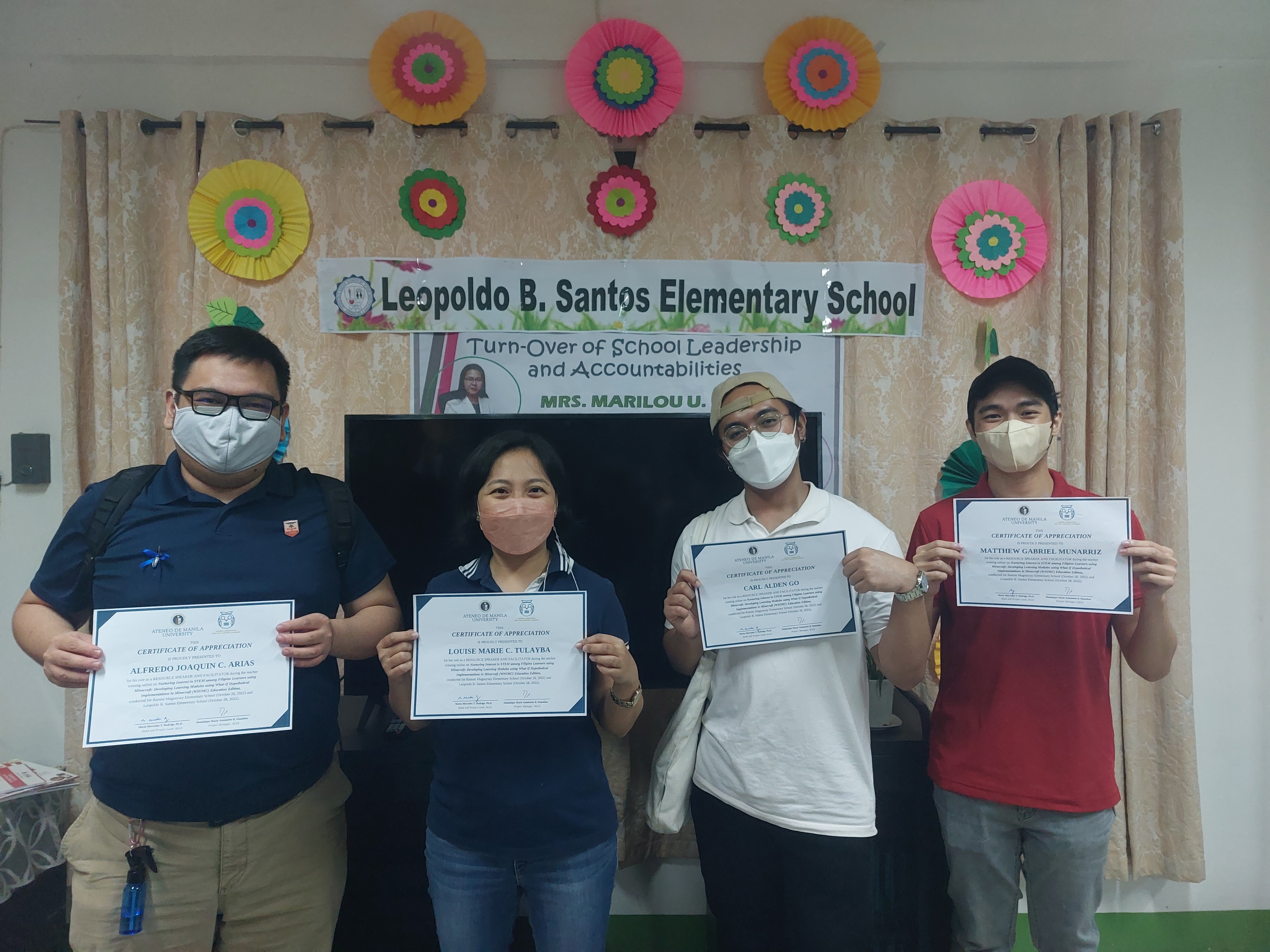
Then, in October 2022, ALLS started to conduct on-site trainings for for Ramon Magsayasay Elementary School (RMES) and Leopoldo B. Santos Elementary School (LBSES) intermediate level teachers.
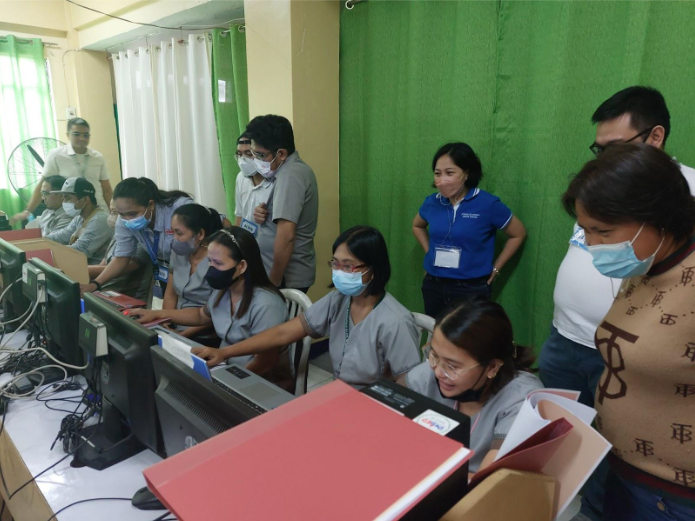
Workshop on the use of WHIMC EE at RMES. The training facilitators and the school principal intently observe the teachers trying the game.
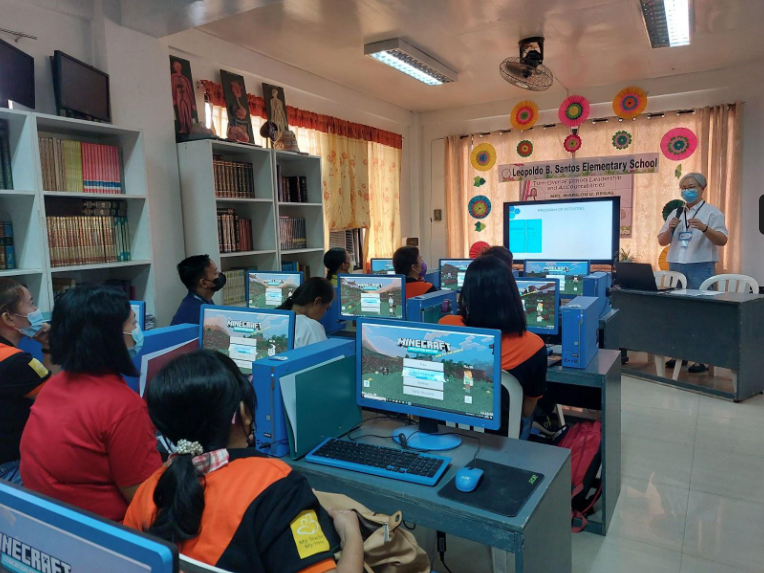
Dr. Rodrigo discussed the training program during the training with RMES teachers.
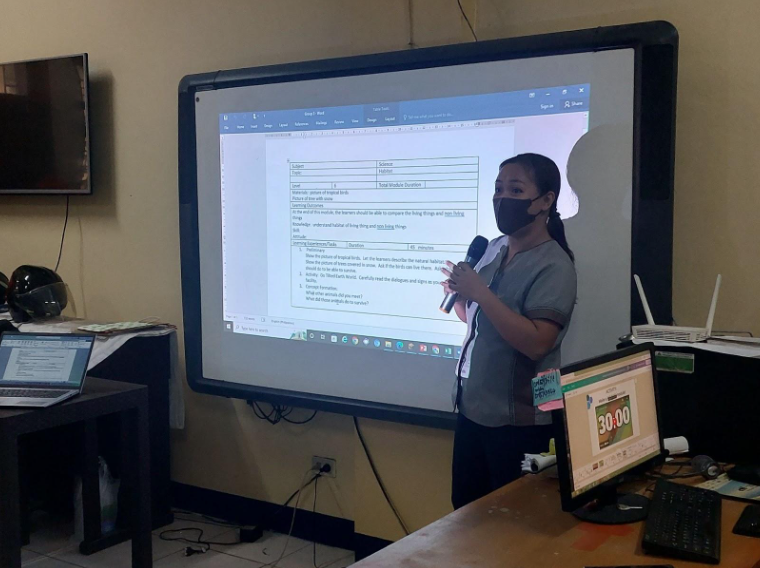
A teacher from LBSES presenting the sample module their group drafted as an exercise.
After the training, each school endorsed teachers from Grade levels 4, 5 and 6. The teachers drafted lesson plans integration WHIMC in a topic from the school curriculum, and implemented it to a pilot class from said levels.
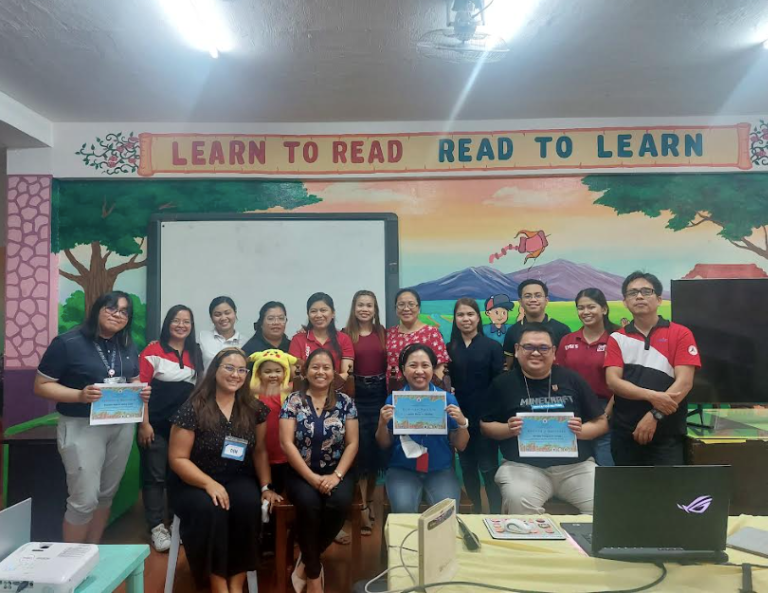
ALLS team and the teachers of ERSES
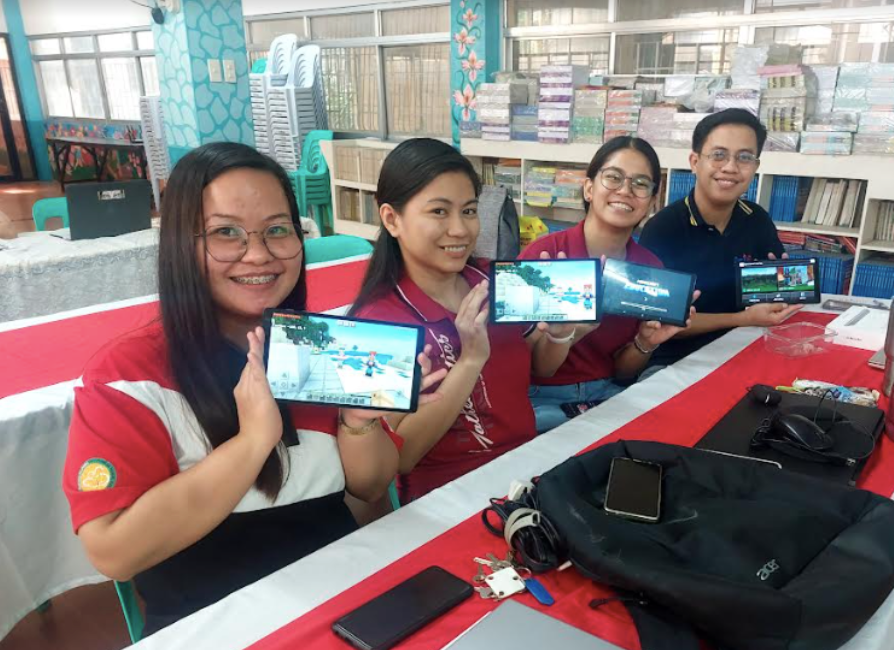
ERSES teachers showing their WHIMC Education Edition apps through the school’s tablets
With the new grant under the University Research Council (URC) of the Ateneo de Manila University, ALLS was able to conduct another on-site teacher training for Eulogio Rodriguez elementary school for their Grades 2 to 6 teachers. This is part of the laboratory’s effort to continue the school deployment of WHIMC in Education Edition
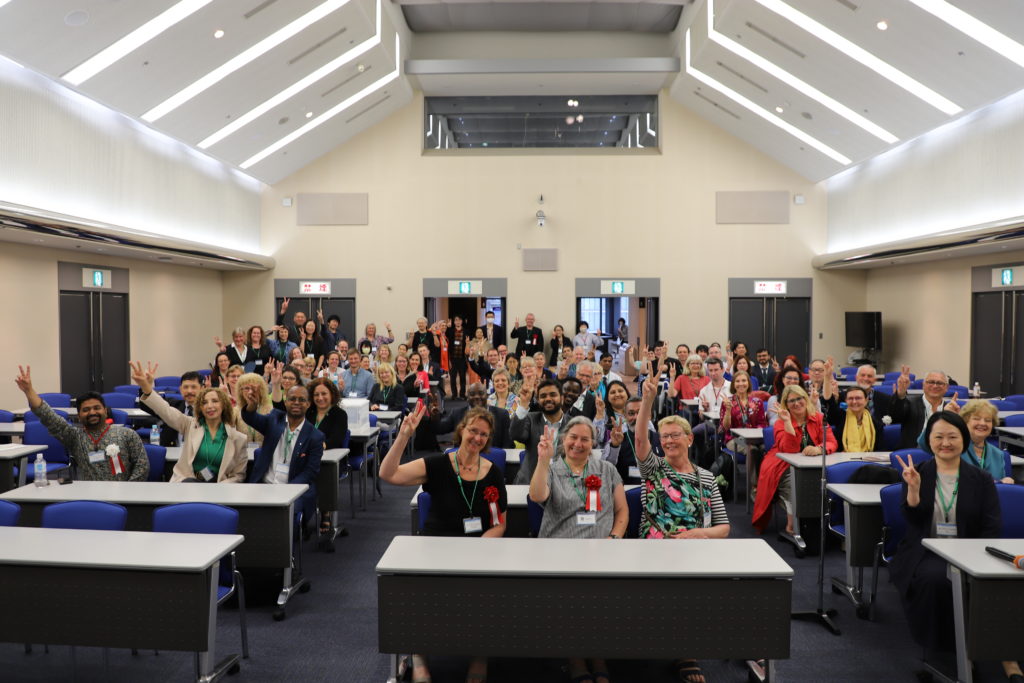
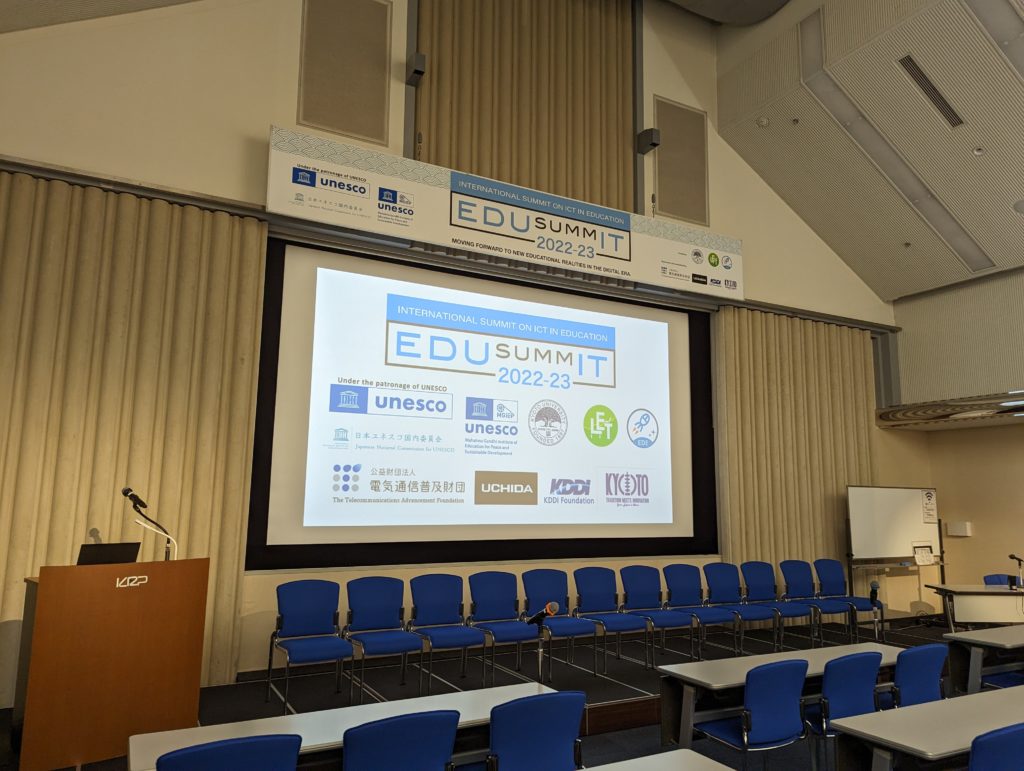
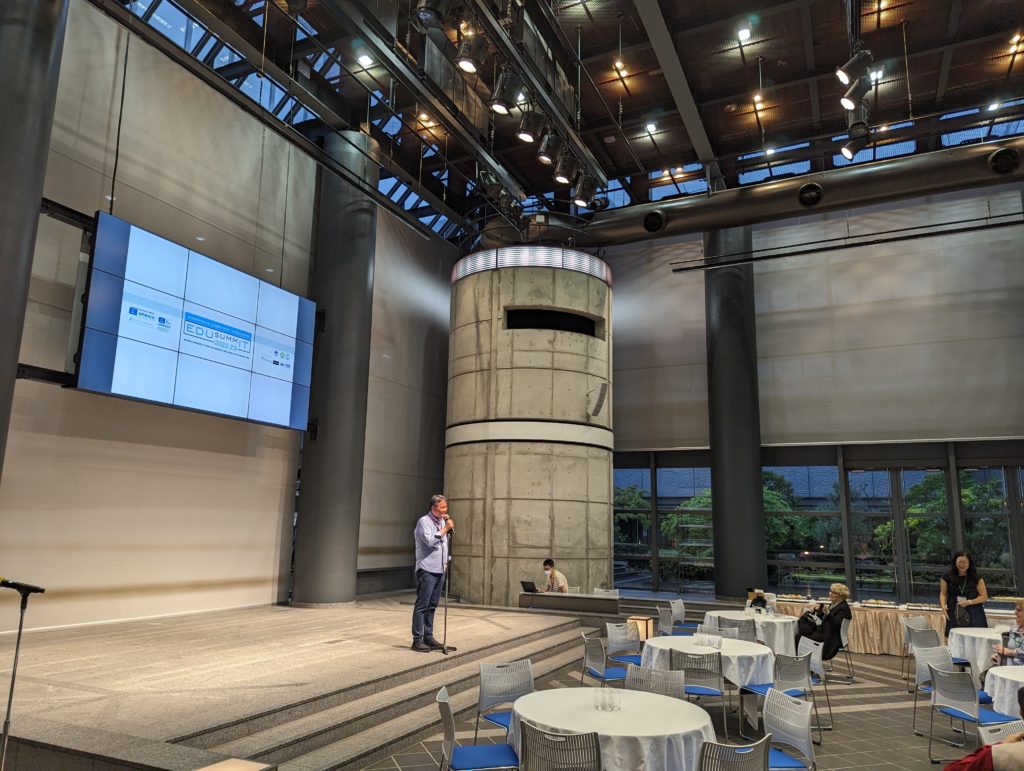
Dr. Maria Mercedes T. Rodrigo of ALLS attended EduSummIT 2023 from May 29 (Mon) – June 1 (Thu), 2023 in Kyoto, Japan. EduSummIT was a gathering of about 90 international researchers, educators, and practitioners interested in the use of effective and appropriate use of information technology in education. It was supported by UNESCO and hosted by the Ogata Laboratory at Kyoto University.